How a suitcase room is made: a look inside the workshop
From an empty vintage-style case to a finished little world: the eight stages every Tiny Treasures room goes through, and why each one is still done slowly, by hand.
June 2026 · 7 min read · By Margaret
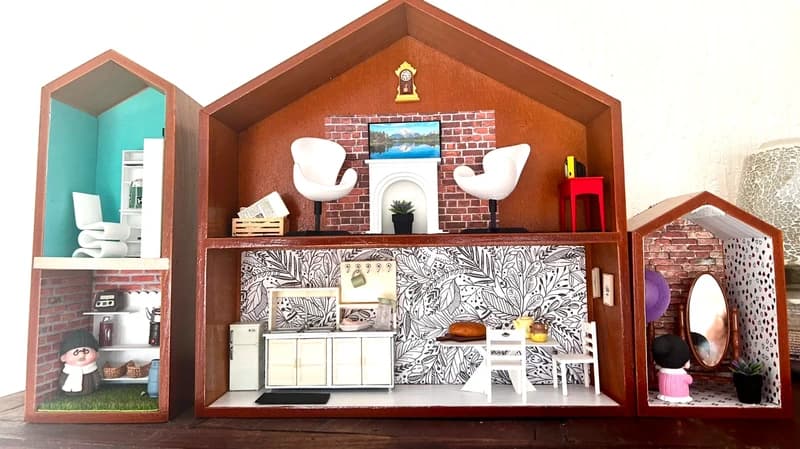
Every Tiny Treasures room starts the same way: an empty case open on the workbench, and a quiet half hour of not touching it. Before any glue comes out I have to know who the room is for and what happens in it. A music room for someone who plays. A nursery for a new baby. A pub corner for a grandad who misses his local. The case is just the stage. The story is the thing, and everything after this is in service of it.
People often ask why a small room takes as long as it does. The honest answer is that almost none of it can be rushed, because every stage has to dry, or be cut to fit, or be tried three ways before one looks right. Here is the whole journey, start to finish.
Choosing the case
Not every case earns a room. I am looking for one that opens to a good angle and stands without toppling, with a lid that shuts cleanly so it can protect the scene and travel. The size of the case decides the scale of everything inside it, so this choice quietly sets every choice that follows.
Floor and walls
The shell goes in first, always, because once furniture is placed you can no longer reach the corners. Flooring is cut and laid, walls are papered or painted, and the whole thing is left to dry properly. This is the least glamorous stage and the one that makes or breaks the illusion. A crooked floor is something the eye never quite forgives.
The big build
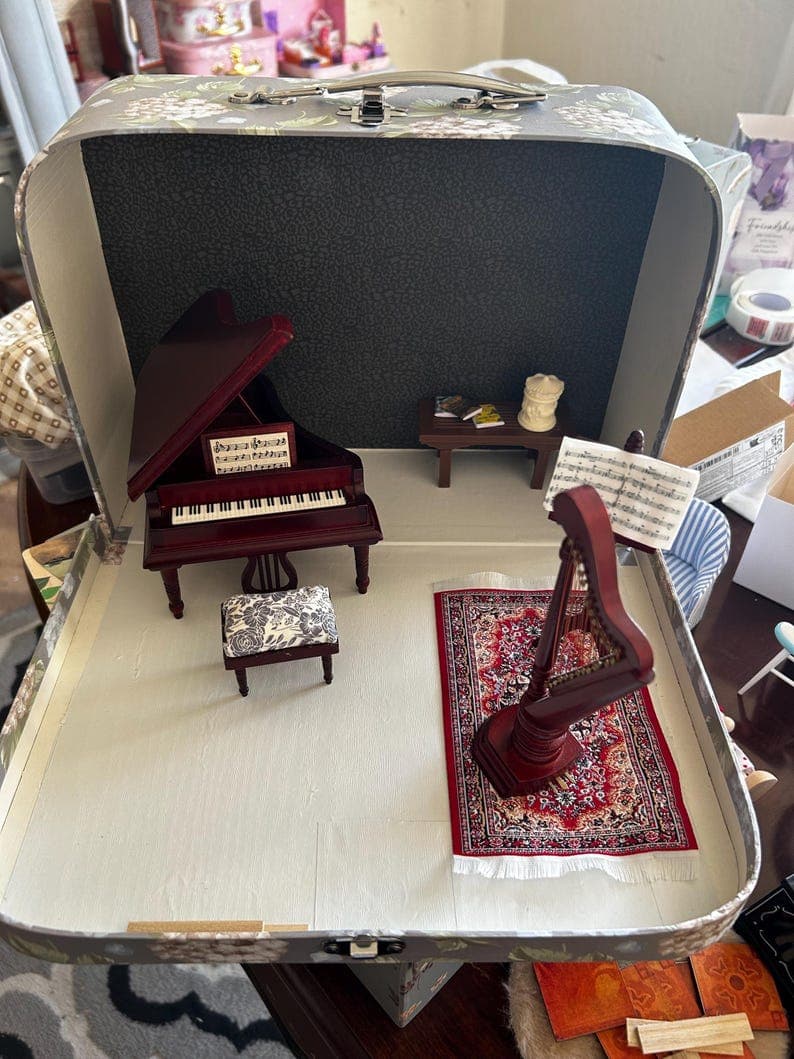
Now the large pieces: the bed, the sofa, the piano, the bar. These are placed and re-placed until there is a clear line of sight from the open lid straight into the heart of the room. If you cannot see into it, none of the detail later will land. I leave nothing glued at this stage, just resting, while I look at it from across the bench.
Textiles
Fabric is what stops a miniature looking hard and printed. A rug cut from a scrap of patterned cloth, a tiny quilt, a curtain, a cushion the size of a postage stamp. Soft things catch the light differently from painted wood, and they are the difference between a model of a room and a room you believe someone lives in.
The tiny details
This is the slow, happy part: the teacup left out, the open book, the bottle on the bar, the framed picture the size of a stamp. Details are added one at a time and judged one at a time, because two too many and the room tips from cosy into cluttered. I would rather a scene held three perfect small things than thirty competing ones.
Lighting and the final styling pass
With everything in, I light it the way it will be seen and walk the scene one last time, nudging, removing, straightening. Often the final act of styling is taking something out. When nothing is fighting for attention and the eye travels naturally from the doorway inward, the room is done, and only then does anything get fixed in place.
The photograph
Each finished room is photographed in natural light, at its own eye level, so what you see online is the actual piece and not a render. The cover photo is chosen to show the line of sight into the room, the same view you will get when the case is open on your shelf.
Closing the case
Finally the lid comes down. A closing case means the scene survives the post, the dust, and the years, and that it can move house in one hand. The last thing I do is open and shut it once more, to be sure the little world inside does not shift. Then it is ready to go to whoever it was always for.
| Stage | What happens | Why it takes the time it does |
|---|---|---|
| Choosing the case | Find a case that opens, stands and shuts well | Sets the scale for everything inside |
| Floor and walls | Cut, lay and dry the shell | Must dry fully and sit straight before furniture |
| The big build | Place and re-place large pieces | Getting the line of sight right takes several tries |
| Textiles | Add rug, quilt, curtains, cushions | Soft fabric is what makes it believable |
| Tiny details | Teacups, books, bottles, pictures | Judged one at a time to avoid clutter |
| Lighting and styling | Light it and edit it down | Often means removing, not adding |
| Photograph | Shoot in natural light at eye level | So the listing shows the real piece |
| Closing the case | Final check, lid down | So it survives post, dust and travel |
That is why a small thing takes a while. None of these stages is hard on its own, but each one waits on the last, and the whole point is that it does not look hurried. Small things, made slowly, are the only kind worth keeping.
How suitcase rooms are made: common questions
How long does it take to make a suitcase room?
It varies by how detailed the room is, but most take several sittings spread over days rather than hours, because each stage has to dry or be tried a few ways before the next can begin. The shell, in particular, must dry fully before any furniture goes in.
Why are the rooms built into suitcases?
A closing case is the frame, the dust cover and the handle in one. Open, it displays the scene; shut, it protects it from dust and damage and lets the whole room be carried, posted or moved house in one hand.
Are the photos of the actual room I receive?
Yes. Each finished room is photographed in natural light at its own eye level, so the listing shows the real piece rather than a computer render. Every room is one of a kind.
Can I ask for a custom room?
Yes, a limited number of commissions are taken each month. Tell us the room, the person and the occasion through the commissions page and we come back within two working days with a sketch and a price.
Read next
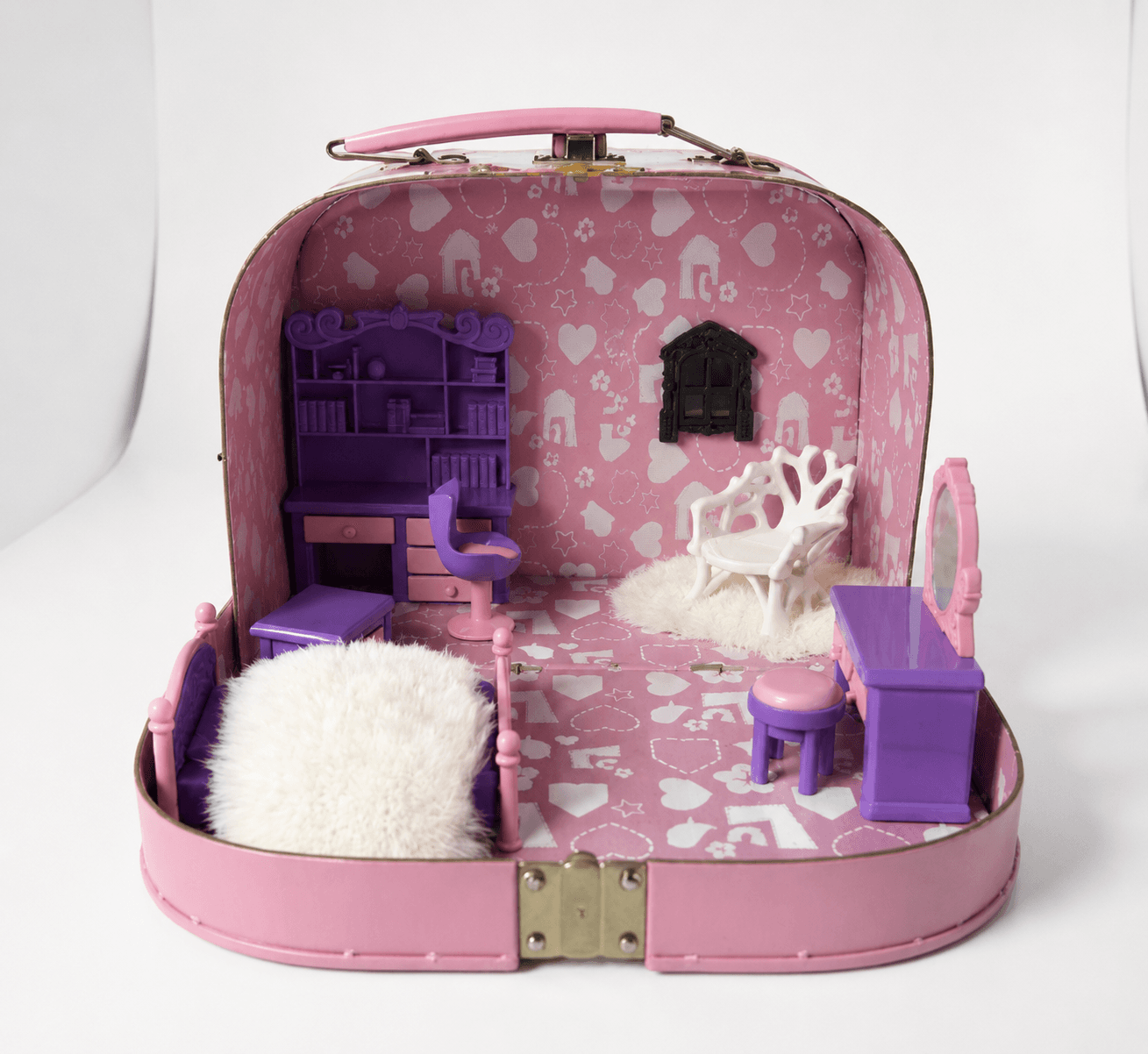
Why I make suitcases
An essay on the quiet pull of miniature worlds, the comfort of making something by hand, and why a closed pink case can feel like a doorway.
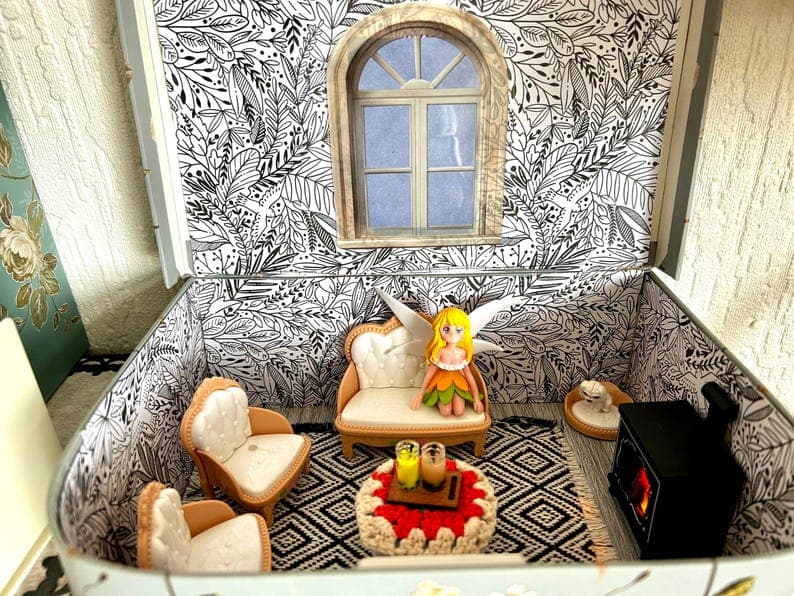
Miniature room boxes for beginners: how to start your first tiny world
What a room box actually is, the scales that matter, and a simple five-step way to build or choose your first miniature room without spending a fortune or buying a single power tool.
Make a room with me, the sticker suitcase
A sticker-covered charity-shop find becomes a girls' bedroom in eight steps. The before, the during, and the moment the lid finally closes.
Written by Margaret at the workshop. Browse current pieces →