Miniature room boxes for beginners: how to start your first tiny world
What a room box actually is, the scales that matter, and a simple five-step way to build or choose your first miniature room without spending a fortune or buying a single power tool.
June 2026 · 7 min read · By Margaret
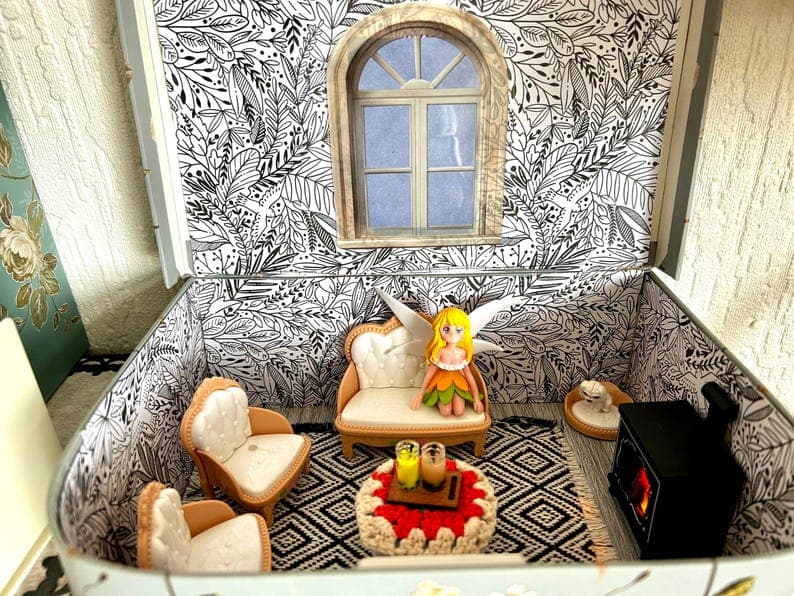
A room box is exactly what it sounds like: a single miniature room built inside a box, open at the front so you can look in. No staircase, no four walls of a whole dollhouse to furnish, no roof. Just one room, done properly. It is the friendliest way into the miniatures hobby, because you can finish it, and finishing something is what makes you want to make the next one.
People come to room boxes from all directions. Some want a calm, fiddly thing to do with their hands of an evening. Some are recreating a room they remember, a grandmother's parlour, a first flat. Some just fell for one in a shop window. You do not need to be artistic. You need patience, a cutting mat, and a willingness to start small. Here is how I would begin if I were starting today.
Pick your scale, and then forget about it
Scale is just the ratio between the miniature and real life. The classic dollhouse scale is 1:12, where one inch stands for one foot and an adult figure is about five inches tall. It is the most common, so furniture and bits are easy to find. Smaller scales like 1:24 let a whole room sit in a tiny footprint. Pick one early so everything you gather matches, then stop worrying about millimetres. A scene reads as right when the pieces agree with each other, not when they hit an exact measurement.
Choose one room and one story
The single biggest difference between a scene that feels alive and one that feels like a furniture showroom is a story. Not a grand one. Someone has just made tea and left the cup. A book is face down on the chair arm. The fire is lit. Decide who this little room belongs to and what they were doing a minute ago, then let every choice answer to that. A room with one clear story and three objects beats a room with no story and thirty.
Find your box
Your first box does not need to be bought. A sturdy wooden crate, a deep drawer, a wine box, even a shoebox for a trial run, any of them works. The only rules are that it stands up on its own, it is deep enough to hold a little furniture, and it is open on one long side. If you would rather skip this stage entirely, a ready-made suitcase room gives you the box, the floor, the walls and the scene already finished, which is a gentle way to learn what good looks like before you build your own.
Do the floor and walls first
The shell is what sells the illusion, so do it before any furniture goes in. Printed miniature flooring and wallpaper are cheap and transform a plain box in minutes. A scrap of patterned paper for the walls and a square of patterned card or fabric for the floor is enough to start. Glue them in fully and let them dry before you place a single chair, because once the furniture is in, you cannot reach the corners.
Furnish from big to small
Place the largest pieces first, the bed, the sofa, the table, and find the layout that leaves a clear line of sight from the open front into the room. Then add the medium things, a rug, a lamp, a shelf. Then, and only then, the tiny details that bring it to life: the teacup, the open book, the folded blanket. Work in that order and the room composes itself. Work the other way and you end up shuffling tiny objects around furniture that is in the wrong place.
| Scale | One inch equals | An adult is about | Good for |
|---|---|---|---|
| 1:12 | One foot | 5 inches / 12 cm | The classic dollhouse scale, easiest to find pieces |
| 1:24 | Two feet | Around 3 inches / 7 cm | Whole rooms in a small footprint |
| 1:48 | Four feet | Around 1.5 inches / 4 cm | Tiny scenes and room boxes on a shelf |
That is genuinely all the theory you need to begin. Pick a scale, pick a story, sort the shell, then furnish big to small. Your first room will not be your best, and that is the point: it teaches your hands what the next one needs. And if you would rather start by living with a finished room while you find your feet, that is exactly what the suitcase rooms are for.
See ready-made miniature rooms
Starting miniature room boxes: common questions
What is a miniature room box?
A room box is a single miniature room built inside an open-fronted box, rather than a whole dollhouse. It lets you focus on one finished, detailed scene, which makes it the easiest and most rewarding way to start the hobby.
What scale should a beginner choose?
1:12 is the most popular and has the widest choice of ready-made pieces, so it is the easiest starting point. Smaller scales such as 1:24 are great if space is tight. The main thing is to pick one scale and keep everything in the room consistent with it.
Do I need expensive tools to make a room box?
No. To begin you mostly need a cutting mat, a craft knife or scissors, glue, and patience. A sturdy box, printed flooring and wallpaper, and a few pieces of furniture will get you a complete first scene cheaply.
Is it easier to buy a finished miniature room?
Many people start with a finished room to learn what good proportions and styling look like, then build their own later. A ready-made suitcase room also solves the box, floor and walls for you in one go.
Read next
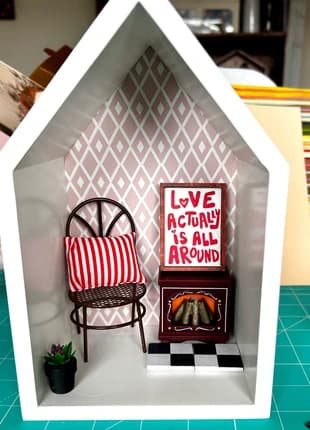
How to display miniature rooms: shelves, walls and suitcase dioramas
Six ways to show off a miniature room so it actually gets lived with, from a floating shelf to a case that closes and travels, plus how to keep dust and sunlight from spoiling it.
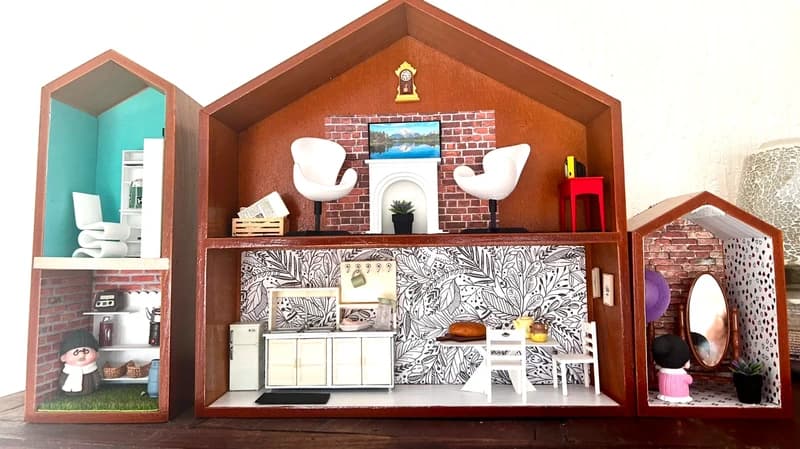
How a suitcase room is made: a look inside the workshop
From an empty vintage-style case to a finished little world: the eight stages every Tiny Treasures room goes through, and why each one is still done slowly, by hand.
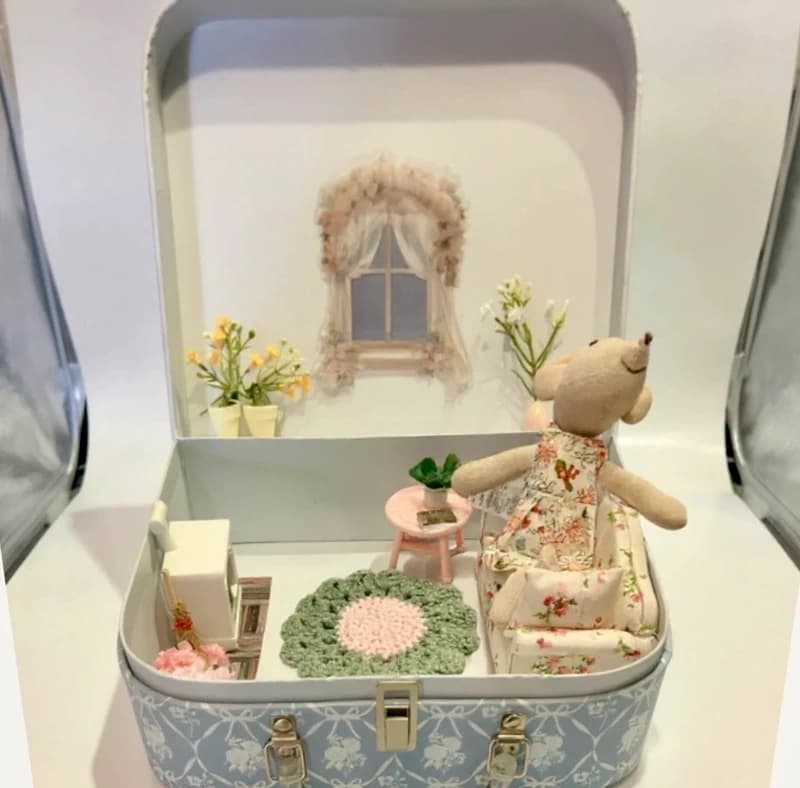
Maileg, a beginner's guide from someone who fell in slowly
What a Maileg actually is, where they came from, the difference between a Micro and a Maxi, what to chase, what to avoid, and how to start a collection without re-mortgaging the cottage.
Written by Margaret at the workshop. Browse current pieces →