Maileg, a beginner's guide from someone who fell in slowly
What a Maileg actually is, where they came from, the difference between a Micro and a Maxi, what to chase, what to avoid, and how to start a collection without re-mortgaging the cottage.
June 2026 · 9 min read · By Margaret
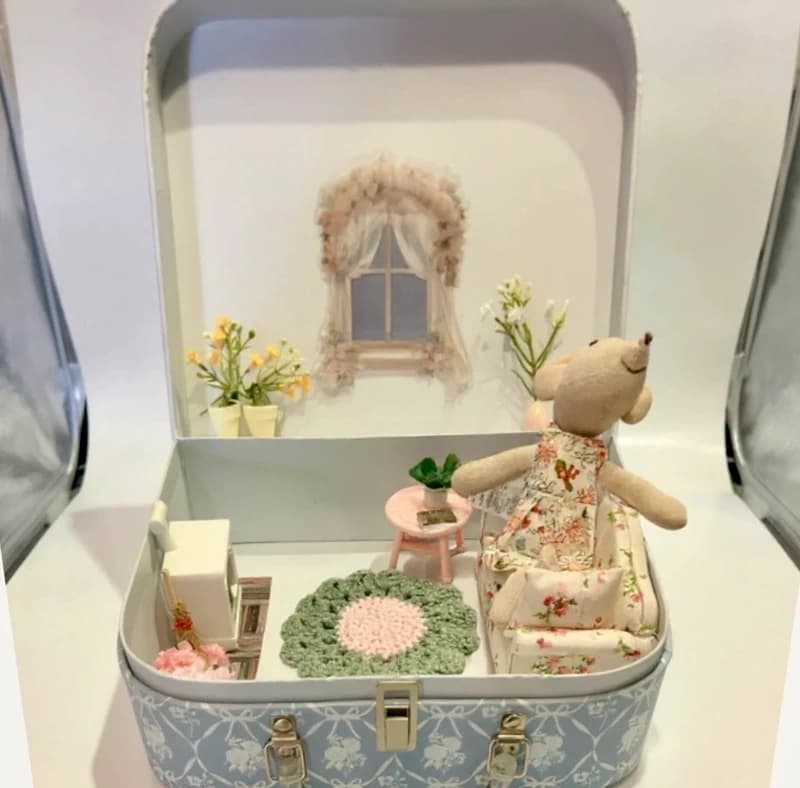
I bought my first Maileg mouse before I knew what Maileg was. She was in a tiny bed, tucked into a striped matchbox, in the window of a little independent shop in Bath that I've since forgotten the name of. I picked her up to look. I put her down. I walked to the end of the street. I came back, paid the twenty-something quid, and carried her home in tissue paper. She lived on my bedside table for a year before I bought a second one, the brother, because she looked lonely.
That, if I had to describe how most people end up here, is exactly how they end up here. So this is the guide I wish someone had handed me before I started looking, with everything I've picked up since, the bits worth knowing, the bits that are mostly marketing, and a few small opinions that I hope land softly.
Where they come from
Maileg is Danish. Their official address is Trehuse 14, 7400 Herning, a town in central Jutland, not the cities you might expect, and they've been making little things there for years. I don't pretend to know the full founder-story; their own pages don't tell it loudly, and I'd rather say less than make things up. What I can tell you is that the quality is consistent enough, and old enough, that secondhand Maileg from fifteen years ago still feels like a Maileg you'd buy today.
The matchbox is half the magic
The thing that makes a Maileg a Maileg, and not just any fabric mouse, is the way they're presented. Most arrive in or with something: a striped matchbox bed, a tiny biscuit tin, a hat box, a little cardboard suitcase printed to look like luggage from the 1920s. Keep the packaging. People who don't realise this in the first year regret it in the second. The mouse on her own is sweet. The mouse in her box is a whole world.
Meet the cast
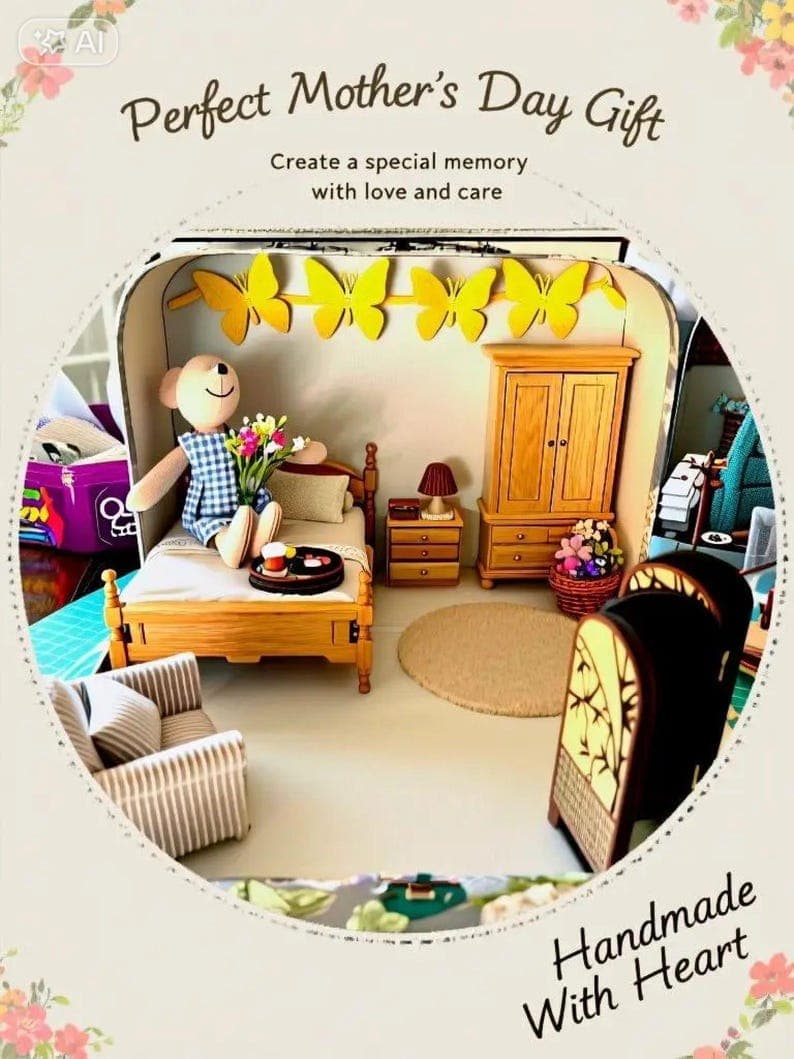
The Mice are the heart of it, and they're organised like a real family, Baby Mice at the smallest, then Little Sister and Little Brother, then Big Sister and Big Brother, then Mum and Dad, and Grandparents at the top of the pile. Each role has a size, and the size tells you which furniture they'll fit into. Beyond the family there are themed mice (hiker mice, beach mice, ballerina mice, super mice, fairies) and bigger Medium / Maxi / Mega mice that aren't part of the family at all, those are pure cuddle toys. There are also Bunnies and Rabbits (a separate world, sized by number rather than family role), Teddies (Mum, Dad, Junior, Baby), and Pixies, the festive Christmas line. Start with one mouse from the family and you'll quickly understand the rest.
Sizes, read the size, not the price
This catches everyone out and Maileg's own size guide is the best place to settle it. The mouse family is sized by family role, that's the system. Then there are the bigger non-family mice in Medium, Maxi, and Mega for cuddles rather than miniature scenes. Bunnies and Rabbits use their own ladder: My, Micro, Size 1, Size 2, Size 3, Size 4, Size 5 (ears up = rabbit, ears down = bunny, yes really). Furniture comes in matching scales: Mouse-sized for the family, My-sized for the babies and smallest pieces, Micro and Miniature for the bunnies and teddies, and a separate Mini range that doesn't fit in any of the dollhouses at all. The size is always on the packaging. If you're buying for a small child to hug: aim for Medium or larger. If you're buying for a miniature room: stay with the mouse family or bunnies in My / Micro / Size 1.
Accessories, where the rabbit-hole starts
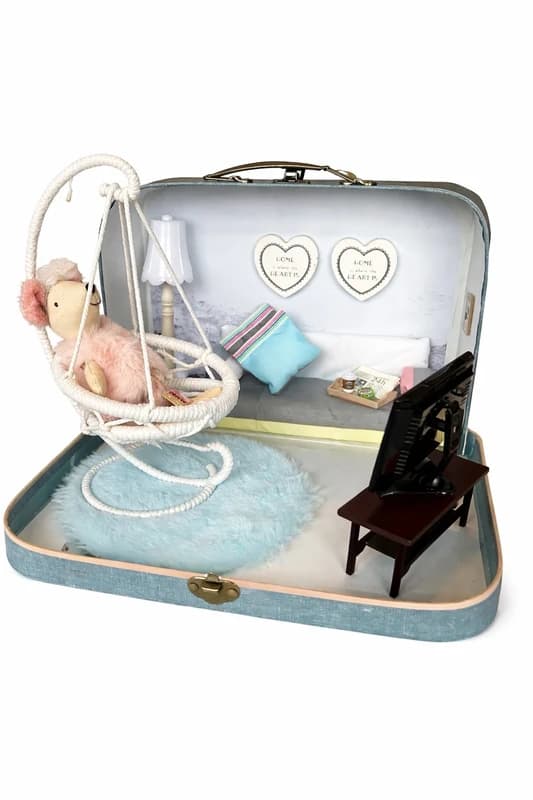
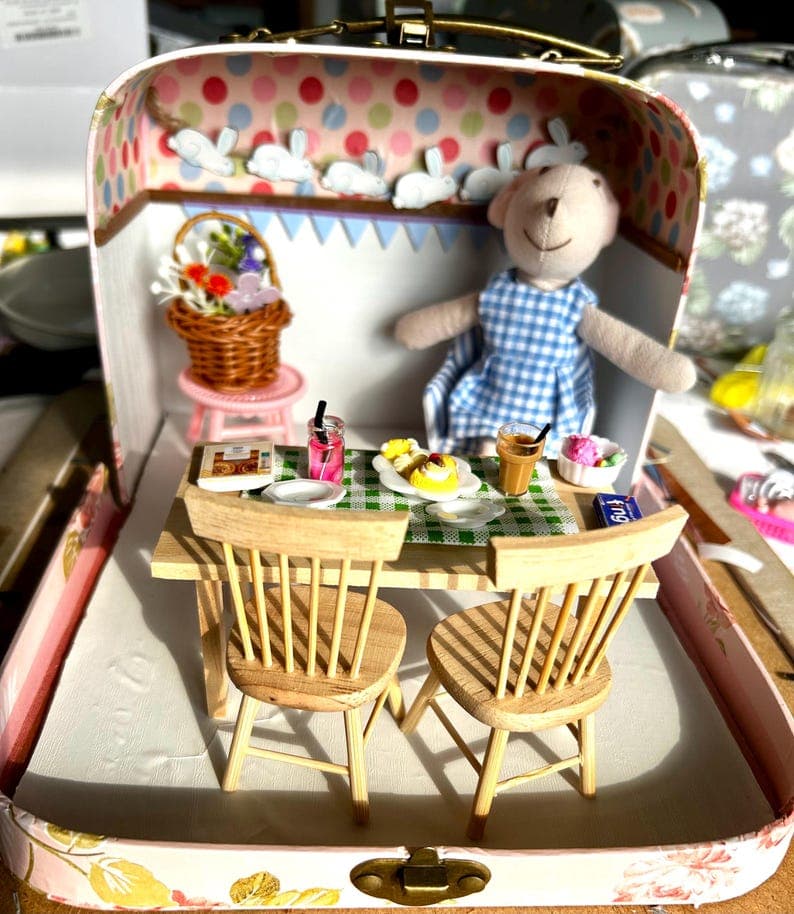
Once you have one mouse you'll discover there's a kitchen for her, a wardrobe of clothes, a doctor's bag, beach chairs, hiking kits, hairdressing trolleys. There are also dollhouses, proper miniature architecture, and four of them really matter: the Mouse Hole Farmhouse and the Mouse Castle for the family, the House of Miniature for bunnies and teddies, and the Gingerbread House for Pixies at Christmas. They also make a portable SuitCasa, a suitcase-shaped travel house for taking a mouse on the road, which is the closest thing in their catalogue to what I make over here. None of this is necessary. All of it is wonderful. Pick what suits the mouse you already love, Mum gets a kitchen, Sister gets a ballet barre, and resist the urge to complete the set. A small handful of carefully chosen pieces in a room beats the entire catalogue crammed in.
Seasonal pieces, the chase
Maileg release limited seasonal pieces around Halloween, Christmas, and Easter. The Christmas line in particular has its own name and its own scale, the Pixy Collection, and grows every year with new little festive characters. Halloween brings the witch- and bat-themed mice. Easter brings the chick-and-bunny mice. These tend to land in shops a few weeks before the season, sell out fast, and then appear on resale sites at two or three times retail. If you find one you love in a shop, in season, at the right price: buy it. They won't make that exact one again. But don't bankrupt yourself chasing every release. The regulars are the heart of the brand. The seasonals are confetti.
Where to buy, and what to pay
Independent gift shops are still the best first stop, the buyers are picky, the stock turns over, you can hold the box in your hand. Online, the brand's own EU site sells direct (they don't ship to the US, for the US there's a separate mailegusa.com), and a handful of well-stocked British baby and homeware boutiques carry the regular ranges. Etsy and Vinted have good second-hand finds if you know what you're looking for (more on that below). Rough prices to expect: a small family-sized mouse with bed and matchbox, in the region of £20–£35; bigger Medium-sized friends £40–£60; furniture sets from a few pounds for a single accessory up to £100+ for a full kitchen or castle; the Mouse Hole Farmhouse and the Mouse Castle, well over £200. If a price feels wildly out of step with this, too high or, more often, suspiciously low, slow down and check.
Spotting a fake
The brand's success means there are a lot of look-alikes, cheaper fabric mice in striped boxes, often shipped from elsewhere, often with subtly wrong proportions. Honest signs you've got a real one: the stitching is tidy on the inside seams, not just the outside; the face is hand-sewn (Maileg's own copy says it: "hand-sewn eyes, soft ears, big personalities"), slightly imperfect, set close together; the packaging carries the Maileg logo and a printed size label; the size always matches one of the official names (Baby, Little Sister/Brother, Big Sister/Brother, Mum/Dad, Medium, Maxi, Mega, or a bunny size). If the eyes look printed or cartoonish, the face is plasticky, or the size on the label isn't one of Maileg's actual sizes, walk away. This isn't snobbery. The look-alikes wear out within a year. The originals last a generation.
A sensible way to start
Buy one mouse. Just one. A regular one, Mum, Sister, or a Cousin, not a seasonal. Keep her in her box on a shelf for a fortnight. See if you reach for her, show people, post a picture, think about a friend for her. If yes: get one matching companion (the brother to her sister, the dad to her mum) and a single accessory, a tea set, a bed, a tiny bicycle. Live with that for a month. If you're still in: now you can start chasing seasonals or saving for a Maxi. Most people skip the first step and end up with a drawer full of beautiful little strangers who never quite gathered into anything. The slow way is the better way.
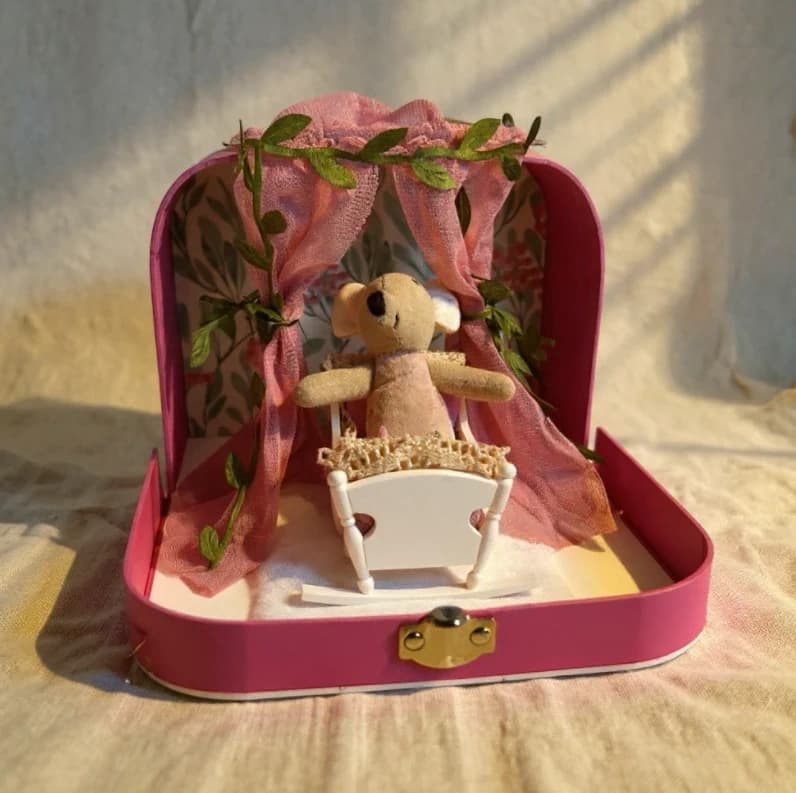
I've been around them for the better part of fifteen years now, and the thing I've come back to over and over is this: Maileg is not really a toy company. It's a memory company. The mice and the matchboxes are an excuse to slow down, to set out a tiny tea on a tiny tray, to put two small things side-by-side and call it a scene. Children love them because they're soft and small. Adults love them because they remember being children.
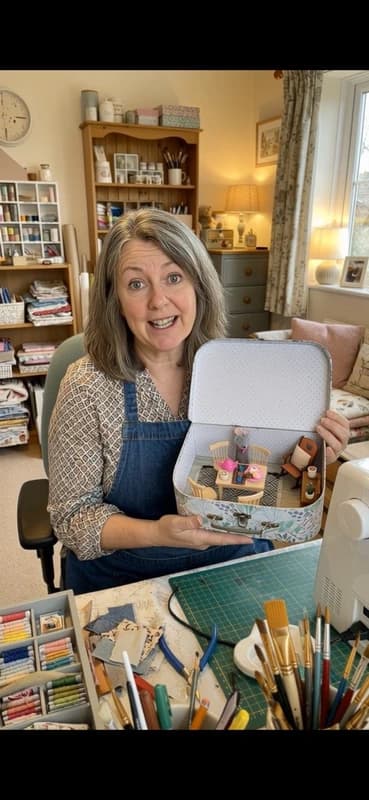
If you've got a mouse or two and you're wondering where they should live, that's why I do what I do. The rooms I make are sized for them, lined for them, lit for them. None of mine come with a Maileg inside (that bit is yours), but they'll fit her, and her brother, and the cousin she didn't mention. The Maileg-inspired pieces are over here when you're ready: tinytreasuresbigworlds.co.uk/maileg-inspired.
And if you've got a mouse you love and a room you've made for her, send me a photo. I keep a folder. It is, hands down, my favourite thing about this little corner of the internet.
Read next
Make it, don't buy it, handmade additions for a Maileg scene from your scrap drawer
Twelve no-shopping-required ways to lift a Maileg scene: a matchbox shelf, a craft-stick crate, a felt rug, a fabric-scrap quilt. All under fifteen minutes each, all from things you already own.
Maileg sizing decoded, Mouse, Micro, My, Mini, and what fits where
The cheat sheet for Maileg sizes: which mice fit which furniture, what "My" vs "Micro" vs "Mouse" vs "Mini" actually means, and the one mistake that costs every new collector a wasted purchase.
The Maileg dollhouse playbook, Mouse Hole Farmhouse, Castle, and House of Miniature, room by room
How to set up the Maileg dollhouses room by room, the Mouse Hole Farmhouse, the Mouse Castle, the House of Miniature, the Gingerbread House, and the SuitCasa. Which house fits which mice, and where the magic moments land.
Written by Margaret at the workshop. Browse current pieces →