Make it, don't buy it, handmade additions for a Maileg scene from your scrap drawer
Twelve no-shopping-required ways to lift a Maileg scene: a matchbox shelf, a craft-stick crate, a felt rug, a fabric-scrap quilt. All under fifteen minutes each, all from things you already own.
June 2026 · 7 min read · By Margaret
The first Maileg room I ever made for someone else was a corner: a matchbox, a folded scrap of linen, a tiny basket I'd glued out of three coffee beans, and a bit of card cut to look like a tea towel. It took about ten minutes. The mouse moved in. The friend it was for cried, in the good way. Nothing in that corner had been bought.
This post is the no-shopping-required version of a Maileg styling guide. You already own a mouse. You don't need more furniture, more clothes, more little accessories. What you need is fifteen minutes, a scrap drawer, and a willingness to cut a square of fabric without measuring it first. Everything below is something I make from what's already in the kitchen, the sewing tin, or the recycling box.
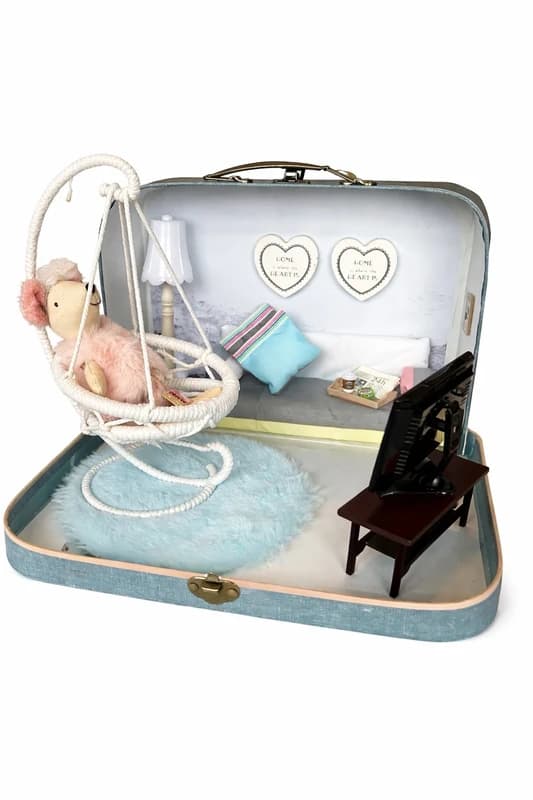
If you'd rather skip the craft sticks and start from a finished room, the Tiny Treasures suitcase rooms are built exactly for this scale. For everyone else, what follows is twelve handmade additions that lift a Maileg scene from shop-bought to lived-in. None of them require glue gun mastery or a single online order.
Size the room to the mouse, not the other way round
The single most common mistake is buying furniture that's wrong-scale for the mouse you actually own. From Hazel & Fawn's size guide, which is the clearest one online: Mum and Dad mice are about 15 cm tall (six inches), Big Sister and Big Brother around 12 cm, Little Sister and Little Brother around 10 cm, and the baby mice considerably smaller. For all of those, except the babies, "Mouse" or "Micro" scale furniture is the safe bet. Baby mice want "My" scale. Don't sweat exact millimetres. A slightly oversized chair gives a scene storybook warmth; a slightly undersized chair makes the mouse look like a kindly giant. Both work. What doesn't work is a piece that's so far off the mouse can't physically sit on it.
Pick one room story before you pick anything else
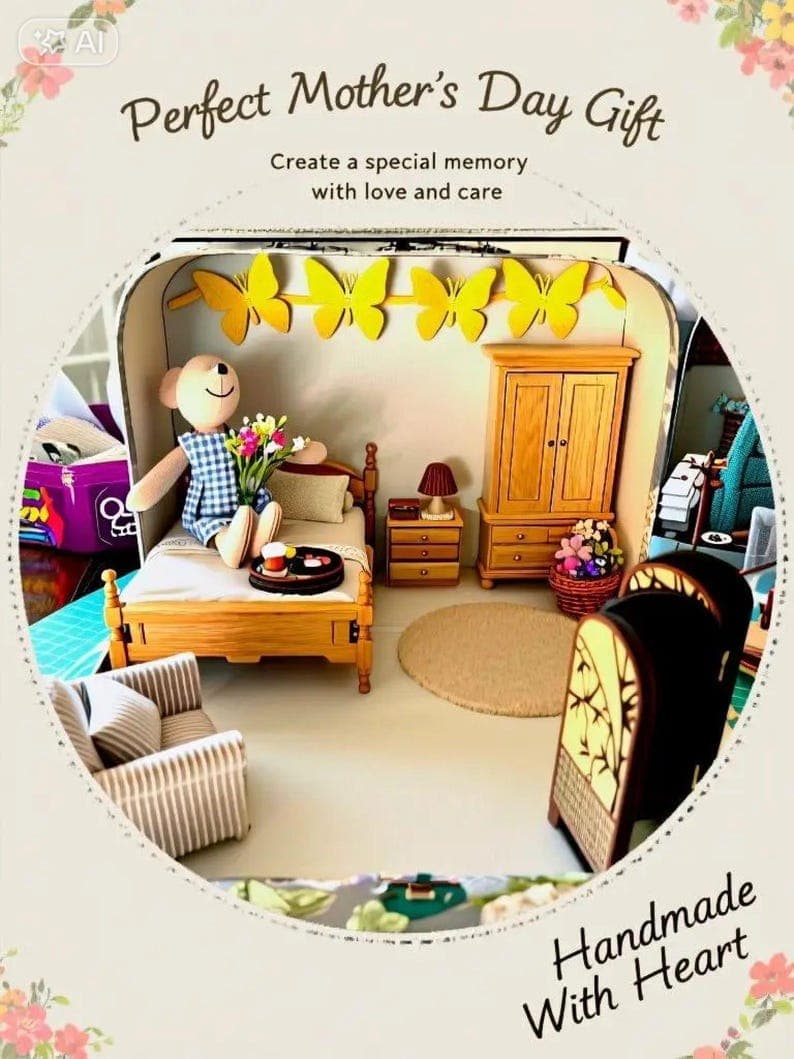
The mistake right after wrong-scale furniture is trying to build a whole house in one go. Don't. Pick one tiny scene first. A bed corner. A breakfast nook. A nursery shelf. A picnic. Build that one well, live with it for a week, and only then think about the room next door. The best scenes I've made were a single moment, not a tour.
- A bedtime corner, bed, folded quilt, soft rug, one book left open
- A breakfast nook, table, two chairs, a tiny mug, a basket of something tiny
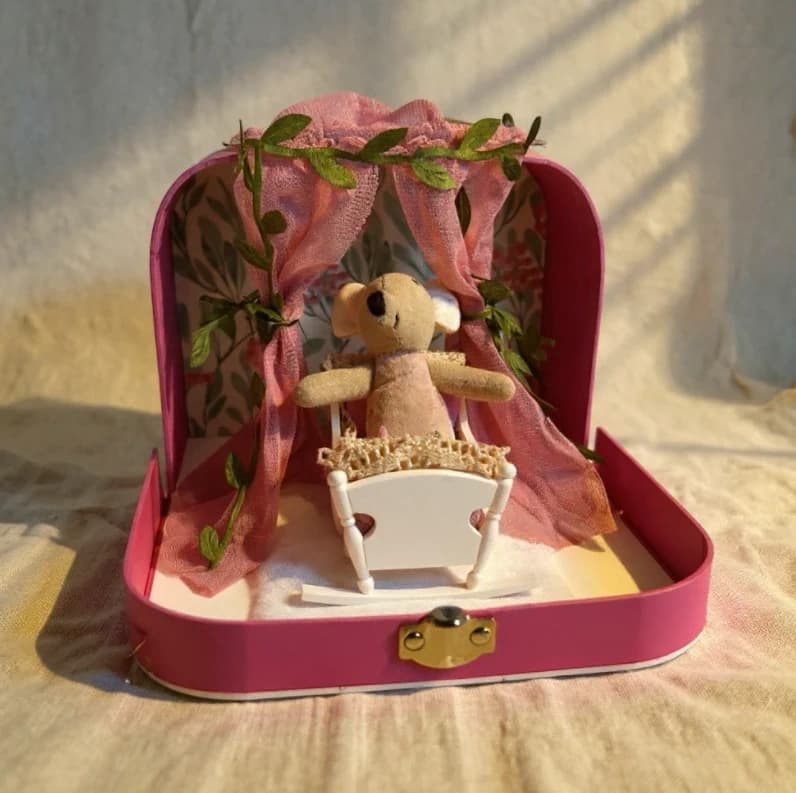
- A nursery, baby mouse, cradle, folded swaddle, a paper garland strung between two pins
- A travelling mouse, small suitcase, folded blanket, three crumbs of bread on a square of linen
- A cosy sitting room, sofa or armchair, one cushion, a side table, a glowing lamp
Choose one handmade hero piece
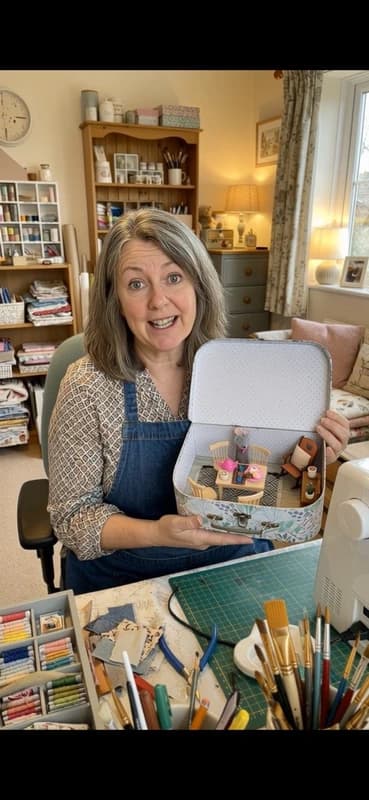
Mix one handmade thing into every scene. Not three, not five, one. A painted bench, a tiny dresser made from craft sticks and stain, a peg rail from a cocktail-stirrer and four beads. That single piece anchors the room and stops it looking shop-bought. The wider miniature world has been quietly favouring natural wood, rattan, vintage edges, and reused fabrics for a while now, Maileg's own pieces already sit in that world, so handmade additions in the same register slot in seamlessly.
- Bare or lightly stained wood (pine offcuts, dowel, craft sticks)
- Painted pieces in soft rose, ochre, sage, cream, or dusty blue
- Woven baskets and rattan-style chairs (a few twists of garden twine will do)
- Hand-sewn mattresses, pillows, curtains, quilts (fabric glue is fine)
- Small repaired pieces with visible mending, that's the heirloom feel
Textiles soften everything
If a room feels off and you can't tell why, it's almost always a fabric problem. Fabric is what turns a stage-set into a home. A scrap of linen on the floor is a rug. A folded square is a blanket. A strip of old tea-towel becomes a runner. Choose tiny prints, micro florals, narrow stripes, pin checks, plain textures. Anything with a pattern that's already large at the kitchen-towel scale will look enormous beside a 12 cm mouse.
- A tiny quilt pieced from three fabric scraps
- A felt rug cut to an oval or scalloped edge
- A folded linen napkin doubling as a picnic blanket
- Mini cushions in gingham, ticking, micro-floral, narrow stripe
- A knitted or crocheted throw (any wool offcut)
- Curtains from lightweight cotton or vintage lace
Accessories suggest, they don't furnish
The thing that turns a scene from staged to inhabited is one good prop that suggests something just happened. A basket and tiny loaf beside the kitchen table suggests breakfast. A book left open on a bed suggests reading. A folded towel near a tub suggests bath night. The viewer fills in the rest. The rule is fewer than you think. A room with five well-chosen items reads as inhabited. A room with twenty reads as a giftshop window.
- Basket + tiny loaf beside a table → breakfast
- An open book on a bed → reading
- A folded towel by a bath → bath night
- An envelope or gift bag → a visit
- Wooden spoon, bowl, apron → baking day
- Small suitcase by the door → a weekend away
Three easy crafts to start with
If you've never made anything in miniature before, here are three that take roughly fifteen minutes each and will lift any Maileg room you already have. Cup of tea, kitchen table, scrap drawer open beside you.
- Wall art from packaging, cut a small square from pretty paper, gift wrap, or wallpaper sample; mount on a piece of card; add a thin border for a frame. Hang it above a bed or dresser.
- Matchbox bed linen swap, make a second blanket for a matchbox mouse from a different fabric scrap. Fabric glue if you don't want to sew. Two minutes of effort, whole new season in the room.
- Tiny crate shelf, glue four craft sticks into a shallow open-front box, stain it, stand it on the floor as a shelf for miniature books and folded linen, or hang it low on a wall with a dot of museum putty.
Display, play, or photograph, and they're three different scenes
Same mouse, three different jobs. If the room is for display, lean into restraint, consistent palette, breathing space around the mouse, no fragile crumbs. If it's for play, choose sturdier pieces (no tiny glass mugs), soft accessories, and baskets a child can rearrange. If it's for the camera, the mouse goes near a window, the background goes plain, and you nudge things off-axis: a chair turned slightly sideways, a blanket spilling rather than folded, a teacup on a saucer with the handle pointing towards the lens. The scene reads as a moment rather than a museum piece.
Common questions about handmade additions for Maileg scenes
What size furniture fits each Maileg mouse?
Mum and Dad mice (around 15 cm) fit "Mouse" or "Micro" scale furniture. Big Sister/Brother (around 12 cm) and Little Sister/Brother (around 10 cm) also do well in Mouse or Micro scale. Baby mice want the smaller "My" scale. Bunnies and rabbits use a separate numbered system (My, Micro, Size 1–5). The size is printed on every Maileg box.
Can I mix handmade dollhouse furniture with official Maileg pieces?
Absolutely, and the best Maileg scenes nearly always do. Handmade pieces add texture and slight imperfection, wood grain, hand-sewn edges, paper edges, that pure shop-bought rooms lack. Tiny Treasures suitcase rooms are designed exactly for this, built at Maileg-friendly scale and finished with the kind of details that make a mouse feel at home.
What miniature textiles work best in a Maileg scene?
Anything with a small-scale pattern: micro florals, narrow stripes, pin checks, ticking, plain linen, soft felt. Avoid large prints, they look enormous beside a 12 cm mouse. Cotton, linen, felt and wool offcuts all photograph well. Lace works for curtains. A scrap drawer is usually a better starting point than a fabric shop.
What's a good Maileg mouse gift idea?
If you're buying for a new collector: a single mouse with a matching matchbox and one small accessory (a bag, a hat, a tiny chair), under £30 in total. If you're buying for someone who already collects: a piece of handmade furniture sized for the mice they own, or a Tiny Treasures suitcase room scaled for a Maileg family. The most successful gifts tend to be small handmade things that complement what they already have, rather than another mouse on top of the mice.
How do I style a Maileg mouse in a matchbox?
Keep the matchbox. The matchbox is half the point. Add a folded blanket the same width as the box, swap the original cardboard "mattress" for a small fabric square pinch-stuffed with cotton wool if you want more cushion, and tuck a tiny object beside the mouse, a paper book, a wooden bead "mug", a folded handkerchief. Don't overdo it. The original matchbox bedroom is already a small world in itself.
How many accessories does one Maileg room need?
Five well-chosen things usually beats fifteen. Aim for one piece of furniture, one textile, one accessory that suggests a moment, and one small detail (a book, a basket, a cup). That's it. The eye needs space to land. Crowded scenes photograph badly and look like a giftshop window in person.
Sources used while writing this, the Maileg EU 2026 collection notes, Hazel & Fawn's Maileg mice furniture and accessories size guide, the Maileg USA dollhouse starter guide, and Funky Mini Furniture's 2026 miniature accessories and dollhouse decor trend articles.
Read next
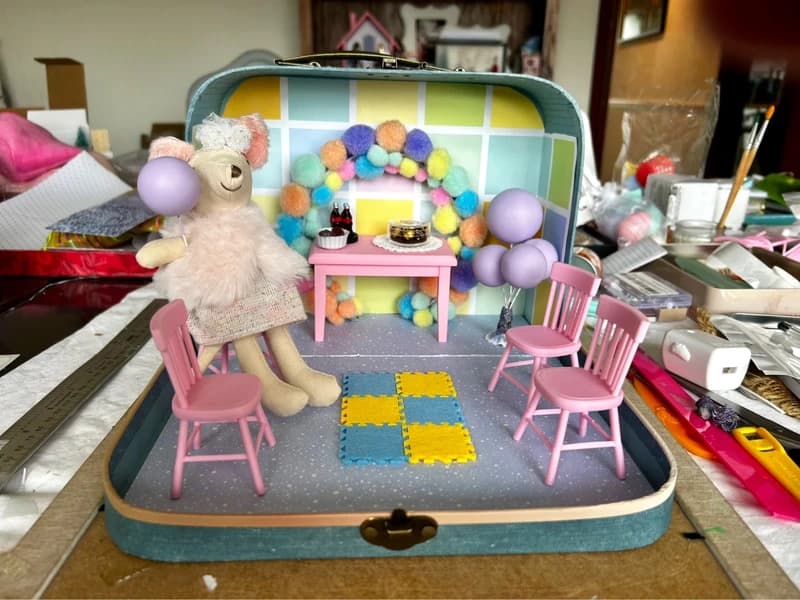
Maileg sizing decoded, Mouse, Micro, My, Mini, and what fits where
The cheat sheet for Maileg sizes: which mice fit which furniture, what "My" vs "Micro" vs "Mouse" vs "Mini" actually means, and the one mistake that costs every new collector a wasted purchase.
The Maileg dollhouse playbook, Mouse Hole Farmhouse, Castle, and House of Miniature, room by room
How to set up the Maileg dollhouses room by room, the Mouse Hole Farmhouse, the Mouse Castle, the House of Miniature, the Gingerbread House, and the SuitCasa. Which house fits which mice, and where the magic moments land.
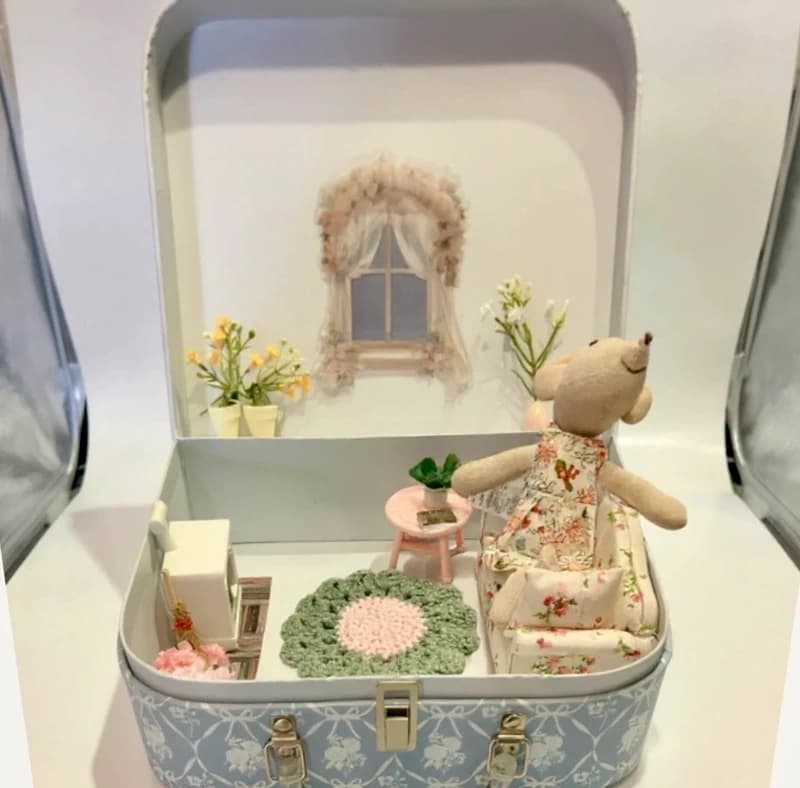
Maileg, a beginner's guide from someone who fell in slowly
What a Maileg actually is, where they came from, the difference between a Micro and a Maxi, what to chase, what to avoid, and how to start a collection without re-mortgaging the cottage.
Written by Margaret at the workshop. Browse current pieces →