How to display miniature rooms: shelves, walls and suitcase dioramas
Six ways to show off a miniature room so it actually gets lived with, from a floating shelf to a case that closes and travels, plus how to keep dust and sunlight from spoiling it.
June 2026 · 6 min read · By Margaret
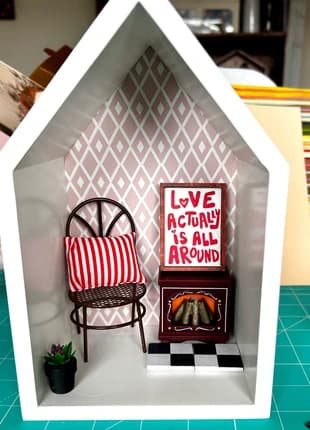
A miniature room nobody can see properly is a quiet kind of waste. The work goes in, the little lamp gets placed so it looks like it glows, the rug is cut to fit the floor exactly, and then the whole thing ends up on top of a wardrobe gathering dust. Where you put a tiny room matters almost as much as how it is made. It wants to be at eye level, in good light, somewhere you pass often enough to keep noticing it.
These are the six ways I most often see Tiny Treasures rooms displayed, roughly in order of how much wall or shelf they ask for. None of them need a workshop, and only one needs a single screw.
A floating shelf, at eye level
The simplest upgrade you can make to any miniature scene is height. A scene viewed from above, looking down onto it, loses all its depth. A scene at eye level lets you look through the little doorway and into the room the way you were meant to. One slim floating shelf, hung so the room sits between chest and eye height, does more for a miniature than any amount of extra furniture inside it.
A narrow picture ledge
If you have more than one room, a picture ledge (the shallow kind made for leaning framed prints) turns them into a row, like little lit windows along a wall. It also lets you swap and rearrange without re-hanging anything. Group an odd number, three or five, and leave a hand's width of air between each so they read as separate worlds rather than one cluttered shelf.
Under a glass cloche or bell jar
A small scene under a glass dome instantly reads as something precious, and the glass keeps every speck of dust off it. This suits the smaller shelf scenes best, a single chair by a fire, a tea tray, a sleeping mouse. The dome does the framing for you, so the scene inside can be very simple and still look complete.
In a suitcase that closes
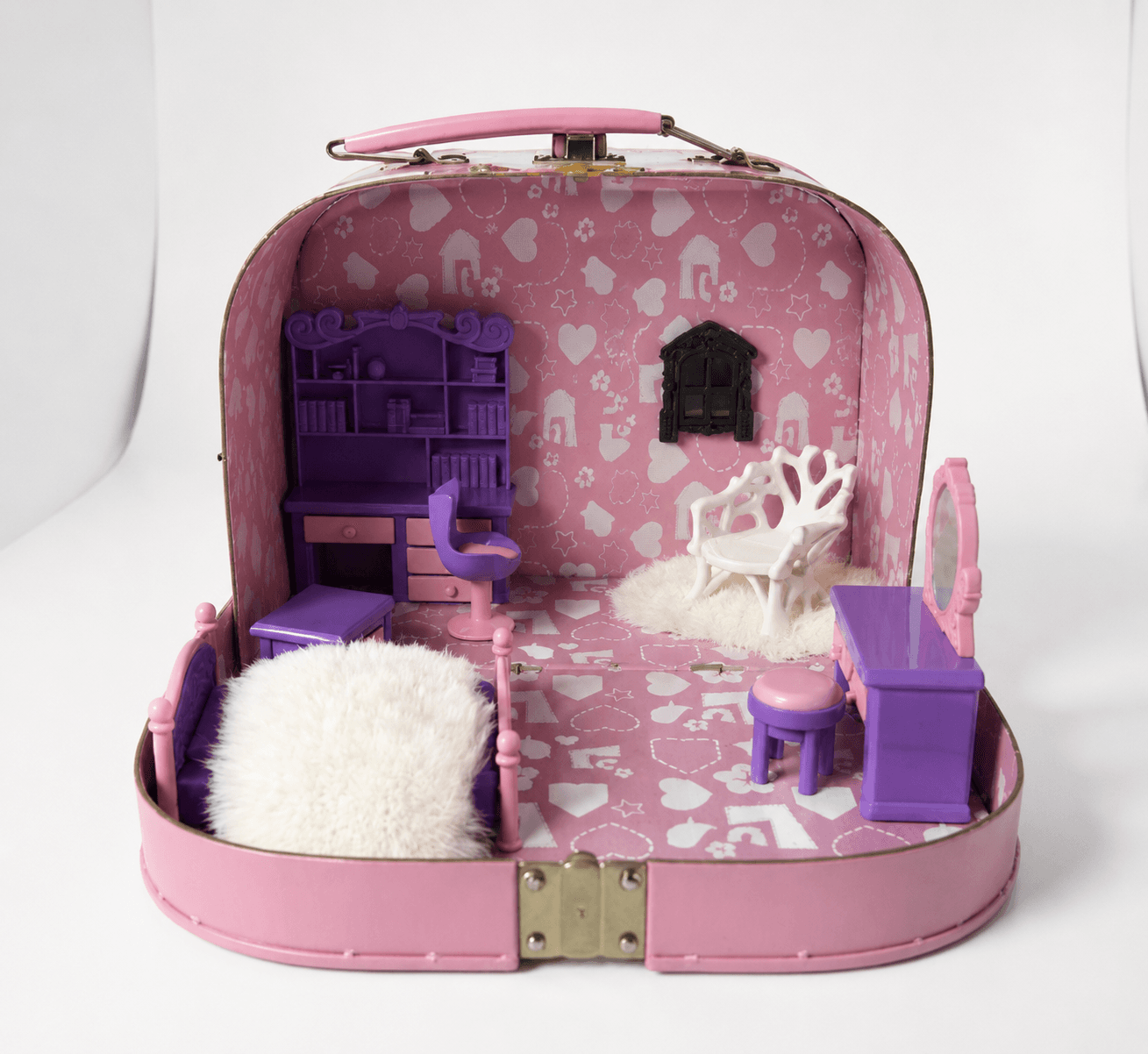
This is the one I am biased towards, because it is what every Tiny Treasures room is built into. A vintage-style case stands open on a shelf or table to show the room, then shuts to protect it, no dust, no fading, and it travels. A grandparent who downsizes can take a whole little world to a smaller home in one hand. A child can carry their room to another room. The lid is the frame and the dust cover and the handle all at once.
A nook in the bookcase
Clear one shelf compartment in a bookcase, ideally one at standing eye level, and let a single room own it. Books on either side give it weight and a sense of place, like a diorama set into a wall. Keep the shelf above it a touch higher than usual if you can, so you are not looking at the room's ceiling.
A console or windowsill, with one caveat
Hall consoles and windowsills are lovely stages, and a windowsill gives you natural light for free. The caveat is direct sun. Hours of it every day will slowly fade fabrics and papers, the same way it fades a curtain. A windowsill that gets gentle morning light is perfect. A south-facing sill that bakes all afternoon will quietly bleach your scene over a year or two, so save that spot for a room kept under glass.
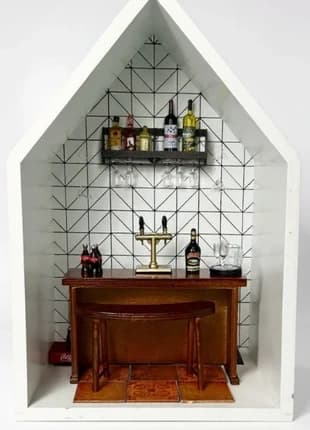
| Display method | Best for | Dust and light protection |
|---|---|---|
| Floating shelf | Any single room | None, dust as you would a shelf |
| Picture ledge | A row of several rooms | None |
| Glass cloche or bell jar | Small, simple scenes | Excellent, sealed from dust and most light |
| Closing suitcase | Rooms that travel or need protecting | Excellent when shut |
| Bookcase nook | One feature room | Some, sheltered by surrounding shelves |
| Console or windowsill | Showpiece moments | Poor, keep out of direct sun |
However you display it, the care is the same and it is gentle. Dust with a soft, dry make-up brush or a clean paintbrush rather than a cloth, which snags on small pieces. Keep the room out of long direct sunlight. And resist the urge to spray anything on it. A miniature room asks for almost nothing once it is made, just a good spot and the occasional soft brush.
Browse shelf scenes and suitcase rooms
Displaying miniature rooms: common questions
What is the best height to display a miniature room?
Eye level, or just below it. A miniature is designed to be looked into through its doorway and windows, not down upon. Sitting it between chest and eye height instantly restores the depth and the sense of a real little room.
How do I keep dust off a miniature room?
Either enclose it (a glass cloche or a closing suitcase keeps dust off entirely) or dust it gently with a soft, dry brush such as a clean make-up or paintbrush. Avoid cloths, which catch on small pieces, and never use sprays or polish.
Will sunlight damage a miniature scene?
Long hours of direct sun will slowly fade fabrics and printed papers over months, just as it fades curtains. Gentle morning light is fine. For a bright, south-facing spot, choose a scene kept under glass.
Can a suitcase diorama be moved or travelled with?
Yes, that is the whole point of building a room into a case. Closed, the lid protects the scene from dust and knocks, so it can be carried by hand, posted, or taken to a new home in one piece.
Read next
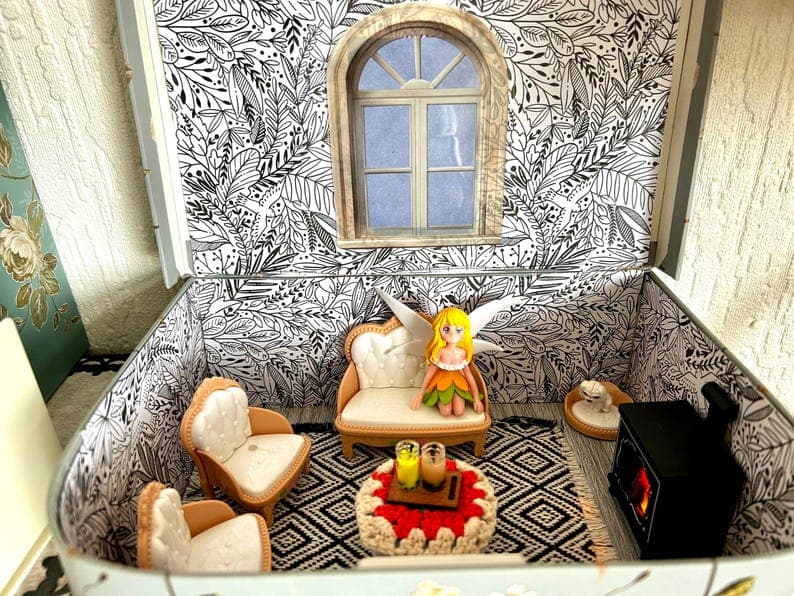
Miniature room boxes for beginners: how to start your first tiny world
What a room box actually is, the scales that matter, and a simple five-step way to build or choose your first miniature room without spending a fortune or buying a single power tool.
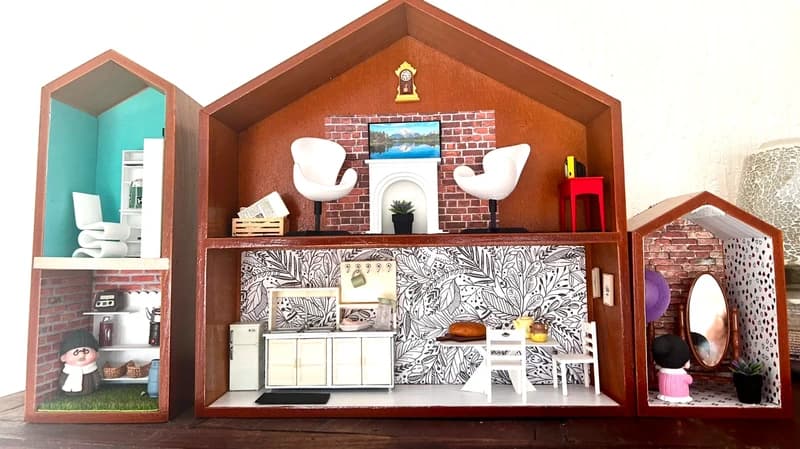
How a suitcase room is made: a look inside the workshop
From an empty vintage-style case to a finished little world: the eight stages every Tiny Treasures room goes through, and why each one is still done slowly, by hand.
Make a room with me, the sticker suitcase
A sticker-covered charity-shop find becomes a girls' bedroom in eight steps. The before, the during, and the moment the lid finally closes.
Written by Margaret at the workshop. Browse current pieces →