The miniature accessories that actually finish a room (and what to skip)
Which small accessories earn their place in a miniature scene, room by room, plus the ones that quietly make a scene look worse and are best left in the drawer.
July 2026 · 6 min read · By Margaret
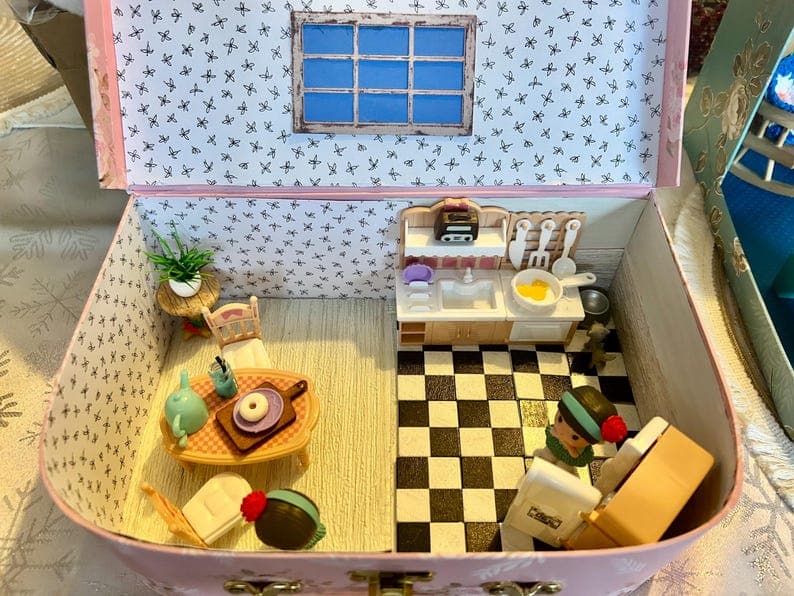
Furniture makes a miniature room. Accessories make it somebody's. A sitting room with a sofa and a rug is a sitting room. Add a half-read book, a pair of spectacles and a cup gone cold, and it becomes a specific person's sitting room on a specific afternoon. Accessories are where the story lives.
But not all of them pull their weight, and a scene can be ruined as easily by too many wrong small things as by too few right ones. Here is what earns its place, room by room.
The kitchen
Kitchens are the easiest room to make convincing because real kitchens are full of evidence of activity. Food part-prepared, a tea towel not quite folded, jars with different fill levels, a kettle, a pot with a lid slightly off. The winning detail is nearly always something interrupted: half a loaf with the knife still beside it says more than a full shelf of tidy tins.
The bathroom
Bathrooms live or die on softness and reflection. Folded towels, one hanging slightly crookedly, small bottles of different heights, a mirror, and a brush or two. Vary the towel colours very slightly rather than matching them perfectly, because a real family's towels never quite match. Anything metal, a tap or a rail, adds a note of realism nothing else can.
The study or writing desk
The most rewarding room for accessories, because everything on a desk implies thought. Books stacked unevenly, an open notebook, pens, a lamp, a cup. The key detail is that a working desk is never tidy: a stack of books with one pulled out and left open tells you what the person was thinking about, which is the whole point.
The utility, laundry and shed
Wonderfully underrated rooms, because they are honest. Baskets, folded and unfolded laundry, pegs, tools on a wall, tins and jars of odds and ends. These spaces are all about texture and repetition, lots of small similar objects in rows, and they photograph beautifully precisely because nobody expects them to be pretty.
The sitting room
Here the accessories should be about rest. A blanket over an arm, a book face down, a tea tray, a plant, something on the mantelpiece that is clearly sentimental rather than decorative. Sitting rooms tempt people into over-filling. Choose fewer, larger, softer things and let the room breathe.
| Room | Accessories worth having | The detail that sells it |
|---|---|---|
| Kitchen | Food, jars, tea towel, kettle, pots | Something interrupted mid-preparation |
| Bathroom | Towels, bottles, mirror, brushes | One towel hanging slightly crooked |
| Study | Books, notebook, pens, lamp, cup | A book pulled out and left open |
| Utility or shed | Baskets, laundry, pegs, tools, tins | Rows of similar objects, unevenly filled |
| Sitting room | Blanket, tea tray, plant, keepsake | A dent in the cushion |
And the things I would gently leave out. These are the accessories that most often make a scene worse:
- Matching sets bought together, which instantly read as a kit rather than a life.
- Anything with a visible white cut edge, until you have coloured the edge in.
- Very shiny plastic food, which catches the light in a way real food never does.
- Too many tiny objects of the same size, which turn into visual noise at a glance.
- Novelty pieces that are funnier than the room, because they become the only thing anyone sees.
- Anything you have to balance precariously, since it will move the first time the case is closed.
The rule underneath all of it is simple: an accessory earns its place if it tells you something about the person who lives there. If it only fills a gap, it is clutter, and the room was better before you put it in.
Shop The Little Details bundles
Miniature accessories: common questions
What miniature accessories should I buy first?
Start with things that imply activity rather than decoration: food part-prepared, an open book, cups, folded towels and baskets. Objects associated with an interrupted action do far more for a scene than purely decorative pieces.
How many accessories does a miniature room need?
Fewer than most people expect. Once small objects crowd each other the eye cannot settle on any of them and the room reads as cluttered rather than lived in. Finish the room, then remove one thing.
Which miniature accessories look cheap?
Very shiny plastic food, printed card with white cut edges, and matching sets bought together. All three are fixable: matt varnish the shine, colour in the edges, and split sets up across different rooms so they do not read as a kit.
What are miniature accessory bundles?
Small mixed handfuls of themed accessories, such as a bathroom, snack or study bundle, sold together rather than piece by piece. They are an easy way to add the lived-in layer to a room without sourcing every tiny object individually.
Read next
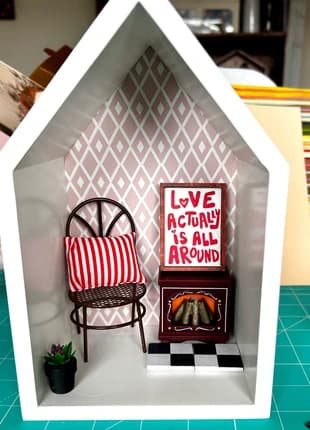
How to add realistic detail to a miniature room: the small things
Ten details that turn a miniature room from a furniture showroom into somewhere that looks lived in, from a half-drunk cup to the art of leaving something slightly out of place.
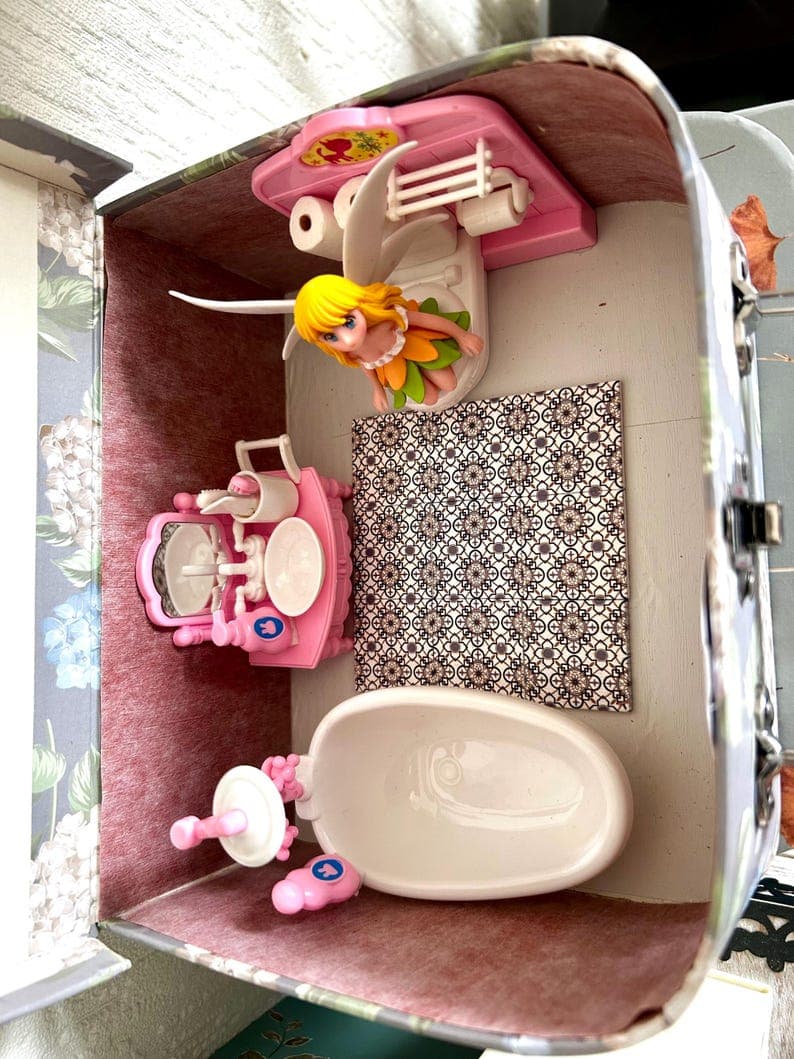
Ageing and weathering miniatures: how to make new things look old
Dry-brushing, washes, edge wear and the tea-staining trick. Five gentle techniques for taking the shine off new miniatures so they look like they have been in the family for years.
How to display miniature rooms: shelves, walls and suitcase dioramas
Six ways to show off a miniature room so it actually gets lived with, from a floating shelf to a case that closes and travels, plus how to keep dust and sunlight from spoiling it.
Written by Margaret at the workshop. Browse current pieces →