What miniature furniture is made from, and how to tell quality from tat
Wood, resin, metal, printed card and 3D print: what each material means for how a miniature looks, lasts and photographs, plus six checks for spotting a well-made piece before you buy.
July 2026 · 7 min read · By Margaret
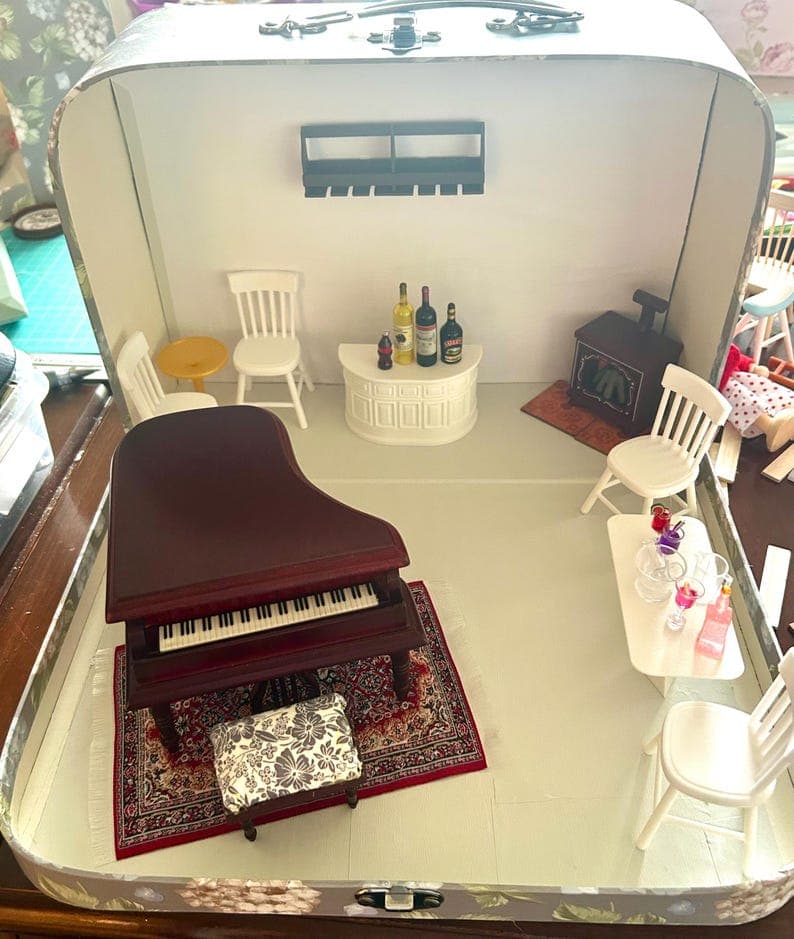
Two miniature armchairs can cost four pounds and forty pounds and look nearly identical in a listing photograph. In the hand they are not remotely the same object. The difference is almost always material and finish, and once you know what to look for it becomes obvious in seconds.
This is not an argument that expensive is always better. Cheap printed card has its place, and some resin pieces are beautiful. It is about knowing what you are buying so it does what you need in the scene.
Wood
The traditional material and still the best for furniture that needs to look real. Wood takes stain and paint the way full-size furniture does, so grain and edge wear read correctly at close range. It is heavier, which helps pieces sit properly rather than skidding about. Look for smooth sanded edges and joints that meet cleanly. Rough end grain and visible glue are the tells of a rushed piece.
Resin
Cast resin is how most detailed small objects are made: ornaments, food, bottles, decorative pieces. It holds crisp detail cheaply, which is why a resin cake can look astonishing for pennies. Its weaknesses are seam lines from the mould and a slight plastic sheen. Both are fixable with a moment's work: scrape the seam with a blade and knock the shine back with a matt varnish.
Metal
Usually pewter or brass, used for things that ought to be metal in real life: kettles, taps, fire irons, bed frames, candlesticks. Metal is the one material that photographs unmistakably as itself, because it reflects light the way nothing else does. A single metal piece in a scene of wood and fabric adds a note of realism out of proportion to its size.
Printed card and paper
Books, boxes, packets, labels, pictures. Card is flat, which is its whole limitation, but for anything that is genuinely flat in real life it is perfect and almost free. The trick is edges: a printed box with white cut edges looks like paper, while the same box with the edges coloured in looks like a box. That one step is the difference between convincing and obvious.
3D printed
Increasingly common and genuinely useful for shapes that are hard to cast. Quality varies enormously with print resolution. Resin printers produce lovely smooth results; cheaper filament prints show visible layer lines that catch the light and read as ridged plastic at close range. If you are buying 3D printed, ask whether it is resin printed, and expect to prime and paint it.
| Material | Best for | Watch out for |
|---|---|---|
| Wood | Furniture, floors, structural pieces | Rough edges, visible glue |
| Resin | Detailed small objects, food, ornaments | Mould seams and plastic shine |
| Metal | Kettles, taps, fire irons, bed frames | Bare unpainted casting marks |
| Printed card | Books, boxes, packets, pictures | White cut edges giving it away |
| 3D print | Complex or unusual shapes | Visible layer lines on cheap prints |
And the six quick checks I use on any piece before it goes into a room:
- Edges: are they sanded and finished, or raw and fuzzy?
- Seams: can you see the mould line, and would it show at eye level?
- Sheen: does it have a plastic shine that no real object of that material would have?
- Weight: does it feel like the thing it is meant to be, or does it skid when you nudge it?
- Proportion: measure it, multiply by twelve, and ask if that is a sensible real-world size.
- Underneath: turn it over. Careless makers stop finishing where they think you will not look.
The last one is the most reliable test there is. The underside of a piece tells you everything about the person who made it, because it is the part nobody was supposed to see.
Browse handmade pieces and accessories
Miniature furniture materials: common questions
Is wooden miniature furniture better than resin?
For furniture, wood generally looks more convincing because it takes paint and stain like the real thing and has believable weight. Resin is better for small detailed objects such as food and ornaments, where it captures fine detail cheaply.
How do I make cheap miniature furniture look better?
Three quick fixes cover most of it: scrape away mould seam lines with a blade, knock back plastic shine with a matt varnish, and colour in any white cut edges on printed card. A light dry-brush of paint in the recesses also adds instant depth.
Is 3D printed miniature furniture any good?
It can be excellent, but quality depends on the printer. Resin-printed pieces are smooth and detailed; cheaper filament prints often show layer lines that look like ridged plastic close up. Most 3D prints benefit from priming and painting.
How can I tell if a miniature is well made before buying?
Check the edges, seams and sheen in the photographs, and ask for a picture of the underside. Careless makers stop finishing where they assume nobody will look, so the base of a piece is the most honest indicator of quality.
Read next
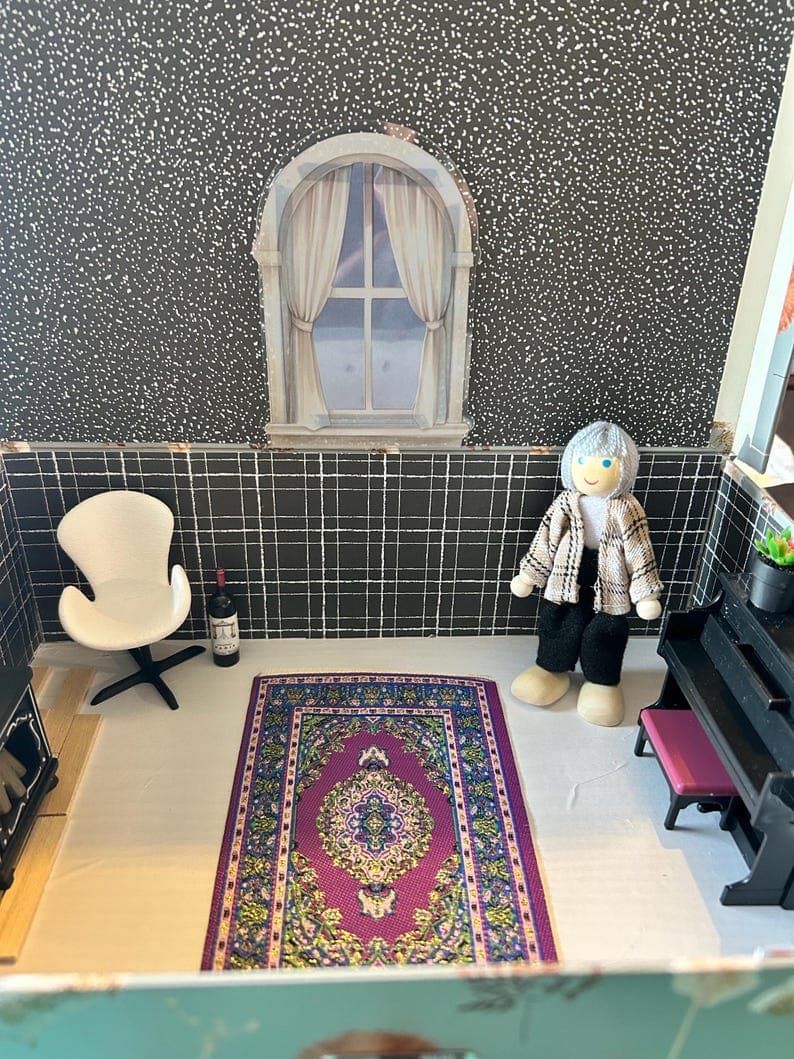
Miniature furniture scale guide: 1:12, 1:24 and how to tell what fits
The only scale guide you need: what 1:12 and 1:24 actually mean in centimetres, the real-world sizes of a bed, table and chair in each, and a simple check for furniture with no scale listed.
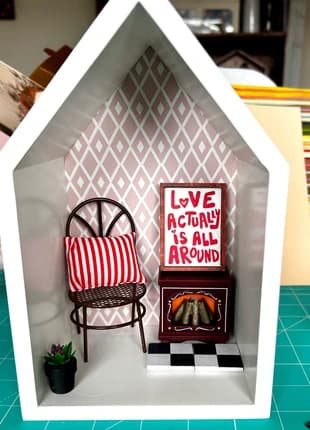
How to add realistic detail to a miniature room: the small things
Ten details that turn a miniature room from a furniture showroom into somewhere that looks lived in, from a half-drunk cup to the art of leaving something slightly out of place.
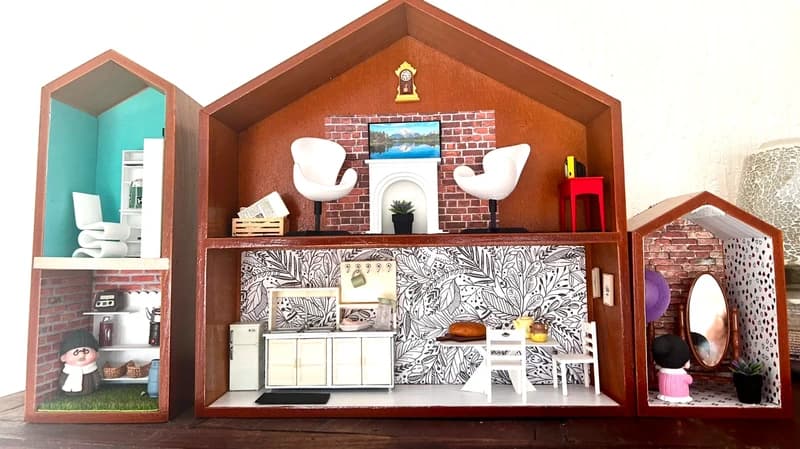
How a suitcase room is made: a look inside the workshop
From an empty vintage-style case to a finished little world: the eight stages every Tiny Treasures room goes through, and why each one is still done slowly, by hand.
Written by Margaret at the workshop. Browse current pieces →