Miniature furniture scale guide: 1:12, 1:24 and how to tell what fits
The only scale guide you need: what 1:12 and 1:24 actually mean in centimetres, the real-world sizes of a bed, table and chair in each, and a simple check for furniture with no scale listed.
July 2026 · 7 min read · By Margaret
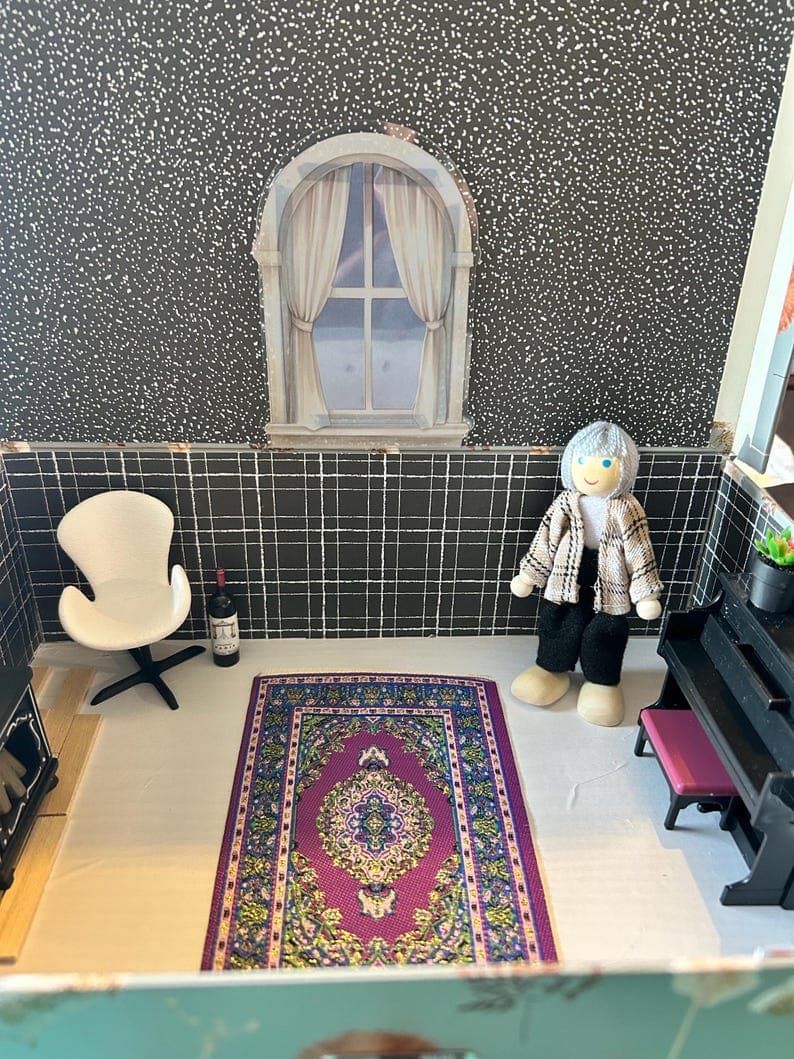
Almost every miniature that looks wrong looks wrong for one reason: the scale is out. Not the paint, not the fabric, not the craftsmanship. The armchair is simply too big for the room, or the teacup is too big for the table, and the eye notices instantly even when it cannot say why. Scale is the grammar of miniatures. Once you have it, everything else you make reads as correct.
The good news is that there are really only two scales you need to care about, and the maths is easier than it sounds. Here is the whole thing in plain terms.
What the numbers actually mean
A scale is just a ratio. 1:12 means the miniature is one twelfth of the real thing, so one inch in the miniature stands for one foot in real life. 1:24 is half that again: one inch stands for two feet, so everything is half the size of its 1:12 equivalent. That is the entire concept. When someone says a piece is "twelfth scale", they mean 1:12.
Why 1:12 is the default
1:12 is the standard dollhouse scale and by far the best supported. If you want to be able to find a matching kettle, rug, lamp or picture frame without hunting for months, work in 1:12. It is also the most forgiving to build in, because pieces are large enough to handle without tweezers and fine motor patience. If you are new, start here.
When to choose 1:24 instead
1:24 (half scale) exists for one very good reason: space. A full 1:12 sitting room needs a surprising amount of shelf. The same room in 1:24 fits in roughly a quarter of the footprint, which is why half scale is popular for room boxes, shelf scenes and anything built into a case. The trade-off is that pieces are fiddlier to make and harder to buy. It is a wonderful second scale and a frustrating first one.
The sizes worth memorising
You do not need a conversion chart for everything. Learn three numbers and you can eyeball the rest. In 1:12, a dining chair is about 7 to 8 cm tall, a dining table about 6 to 7 cm tall, and an interior door about 16 to 17 cm. If a piece sits in that family, it belongs. Halve all of those for 1:24. Everything else in a room takes its cue from the chair and the table.
| Piece | Real size | 1:12 | 1:24 |
|---|---|---|---|
| Interior door | 200 cm tall | About 16.5 cm | About 8 cm |
| Dining table | 75 cm tall | About 6.5 cm | About 3 cm |
| Dining chair | 90 cm tall | About 7.5 cm | About 3.75 cm |
| Double bed | 190 x 135 cm | About 16 x 11 cm | About 8 x 5.5 cm |
| Kitchen worktop | 90 cm tall | About 7.5 cm | About 3.75 cm |
| Ceiling height | 240 cm | About 20 cm | About 10 cm |
How to check a piece with no scale listed
Plenty of second-hand and handmade furniture is sold with no scale at all. There is a quick test: find any measurement the seller gives, multiply it by 12, and ask whether that is a sensible real-world size. A chair listed at 7.5 cm becomes 90 cm, which is a normal chair, so it is 1:12. A chair listed at 4 cm becomes 48 cm, which is a child's stool, so it is more likely 1:24. If the answer sounds absurd in real life, the scale is not what you assumed.
When breaking scale is allowed
Purists will disagree, but a scene is a picture, not a survey. Slightly oversized furniture reads as cosy and storybook. Slightly undersized reads as delicate and doll-like. Both can be lovely, and mixing scales deliberately is how you make a room feel like it has been collected over years rather than bought in a set. What you cannot get away with is one piece that is wildly off, because it becomes the only thing anyone looks at.
So: pick 1:12 unless space says otherwise, memorise the chair and the door, and multiply by twelve whenever you are unsure. That is genuinely the whole guide. Everything else is taste.
See finished rooms built to scale
Miniature furniture scale: common questions
What is 1:12 scale in miniatures?
1:12 means the miniature is one twelfth of the real object, so one inch represents one foot. It is the standard dollhouse scale and has the widest choice of furniture and accessories, which makes it the easiest scale for beginners.
What size is a 1:12 scale dining chair?
About 7.5 cm tall, because a real dining chair is roughly 90 cm. A 1:12 dining table is about 6.5 cm tall and an interior door about 16.5 cm. If a piece falls near those numbers, it is 1:12.
How do I work out the scale of a miniature with no label?
Take any measurement of the piece and multiply it by 12. If the result is a believable real-world size, the piece is 1:12. If it comes out far too small, try multiplying by 24 instead, which would make it half scale.
Can I mix 1:12 and 1:24 furniture in one room?
Mixing wildly different scales in a single room usually looks like a mistake, because one piece will dominate. Small deliberate variation within a scale is fine and can make a room feel collected over time, but keep the main furniture consistent.
Read next
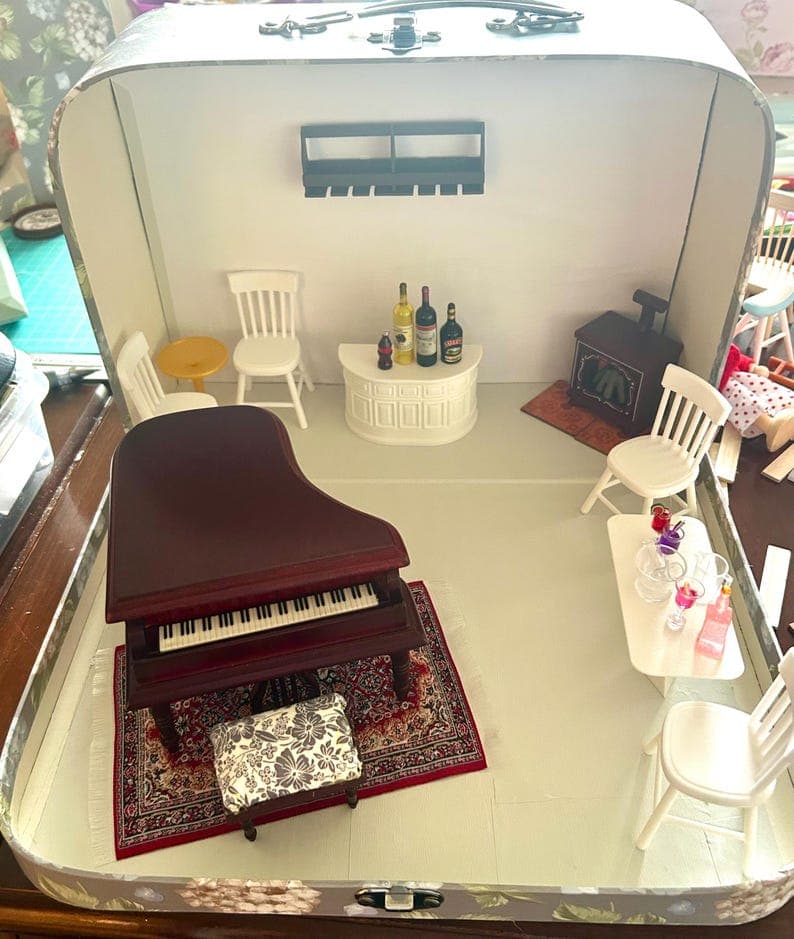
What miniature furniture is made from, and how to tell quality from tat
Wood, resin, metal, printed card and 3D print: what each material means for how a miniature looks, lasts and photographs, plus six checks for spotting a well-made piece before you buy.
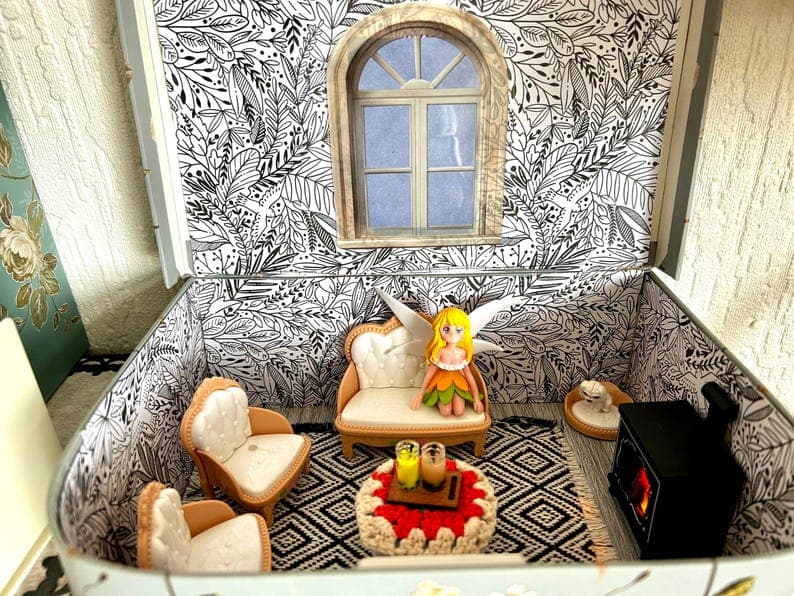
Miniature room boxes for beginners: how to start your first tiny world
What a room box actually is, the scales that matter, and a simple five-step way to build or choose your first miniature room without spending a fortune or buying a single power tool.
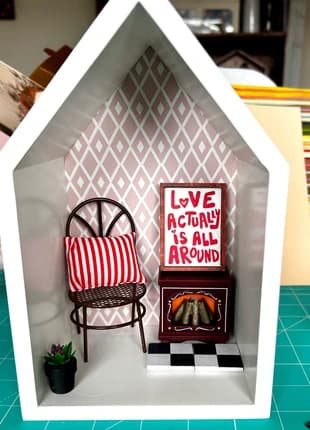
How to add realistic detail to a miniature room: the small things
Ten details that turn a miniature room from a furniture showroom into somewhere that looks lived in, from a half-drunk cup to the art of leaving something slightly out of place.
Written by Margaret at the workshop. Browse current pieces →